Brand Ambassador Software
Coordinate ambassador enrollment, missions, submissions and rewards in a branded program.
Explore this use case →
Ambassador Program Migration
Use ambassador platform migration to move an existing ambassador program into a structured hub for missions, reviews and rewards.
Map every ambassador and rule
Plan how profiles, points, and mission history move, so ambassadors lose nothing in the switch.
Keep ambassadors posting during the move
Avoid program gaps by running a tested cutover that keeps missions and rewards live throughout migration.
Improve the program after launch
Use new missions and reporting tools to grow ambassador activity once your migration is fully complete.
✓ SOC 2 Type IITrusted by 300+ brands




The team has helped us scale the referral program to multiple markets including US, Japan, Australia, Singapore.
As a trusted partner, the Nextbee team has consistently delivered reliable and responsive service in support of Just Energy's digital gift card program.
NextBee delivered the right platform and the right partnership. Their comprehensive solution and collaborative approach helped us grow participation from an original goal of 10% to 35% of our customer base.
If you're looking for a powerful platform to run your loyalty and promotions initiatives, NextBee should be your first choice.
An ROI positive program is not just a buzzword, but a commitment we stand by.




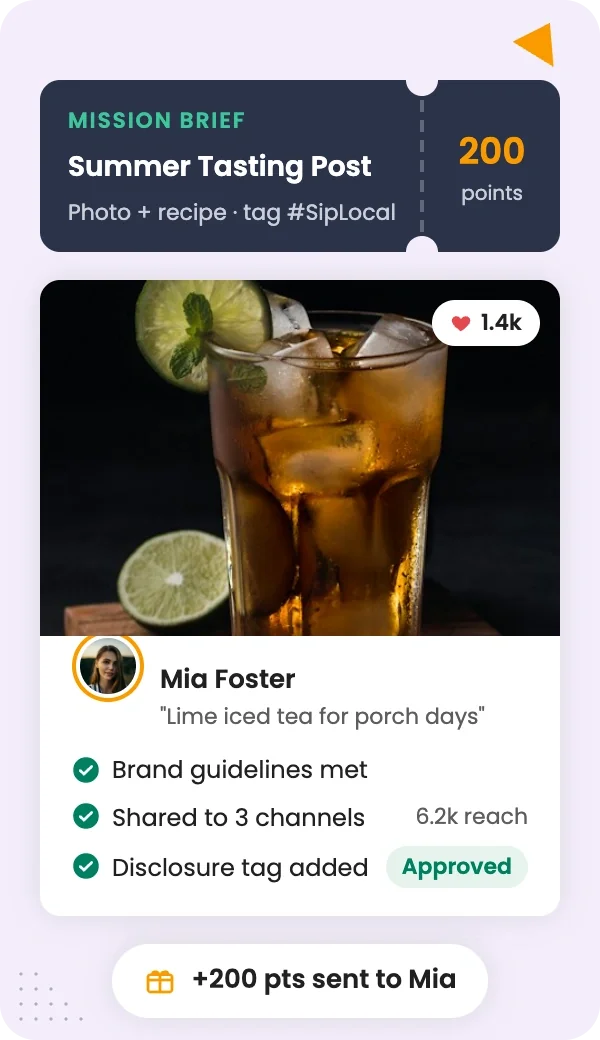
Build a beverage brand ambassador program with mission briefs, submission review, and reward rules in one platform. Give fans clear ways to share tastings, recipes, shelf finds, and product moments with fans who trust their recommendations.
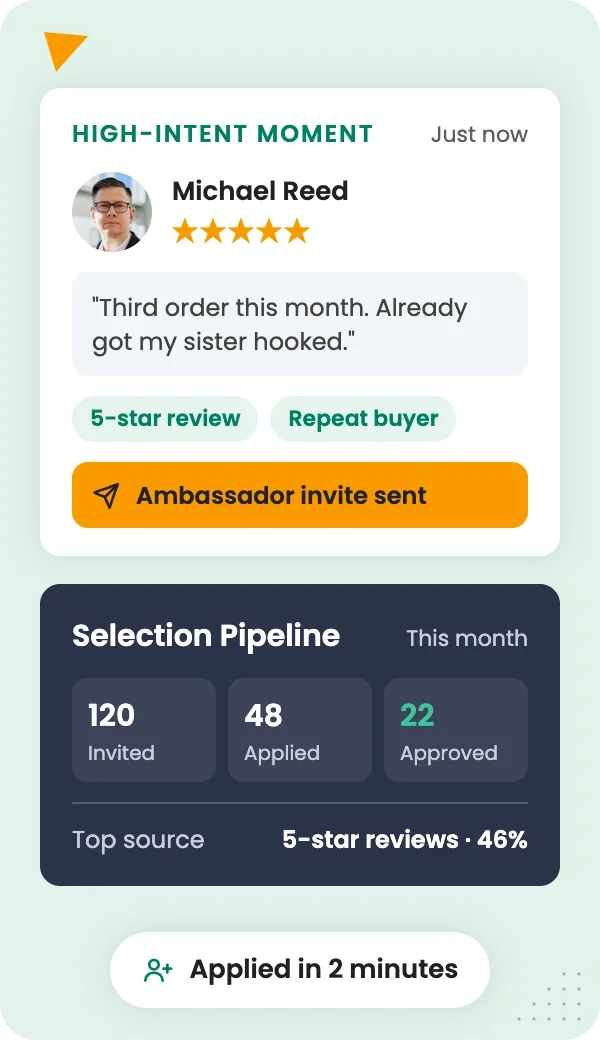
Invite customers after a strong review, repeat purchase, or other high-intent moment using ambassador recruitment software and structured selection workflows. You start with applicants who already know the product and have a reason to talk about it.
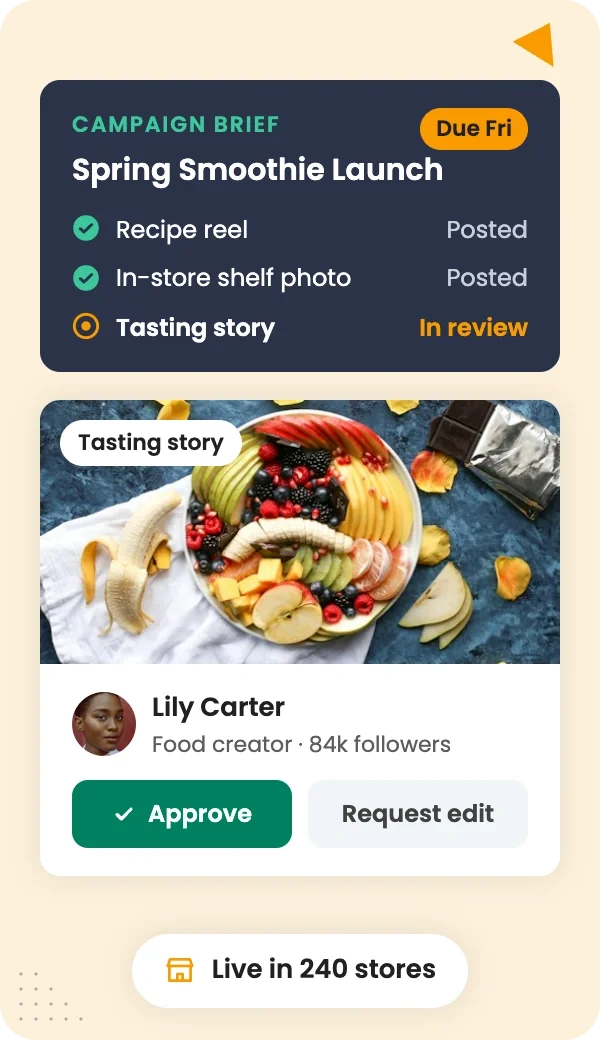
Give food and beverage creators clear product briefs, retail activation tasks, deadlines, and approval steps in one creator management platform. Recipes, tastings, and shelf content can then support the exact launch or promotion they were created for.
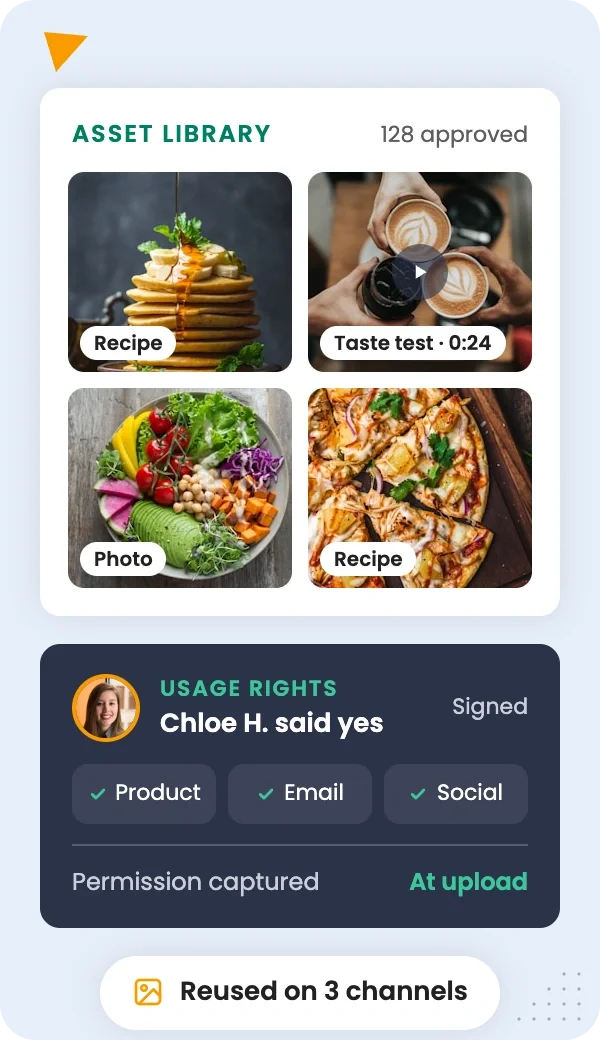
Gather customer photos, videos, recipes, and product reactions through CPG UGC campaigns with permission capture built into the workflow. Organize approved content so marketing teams can quickly reuse the best assets across product pages, email, and social.
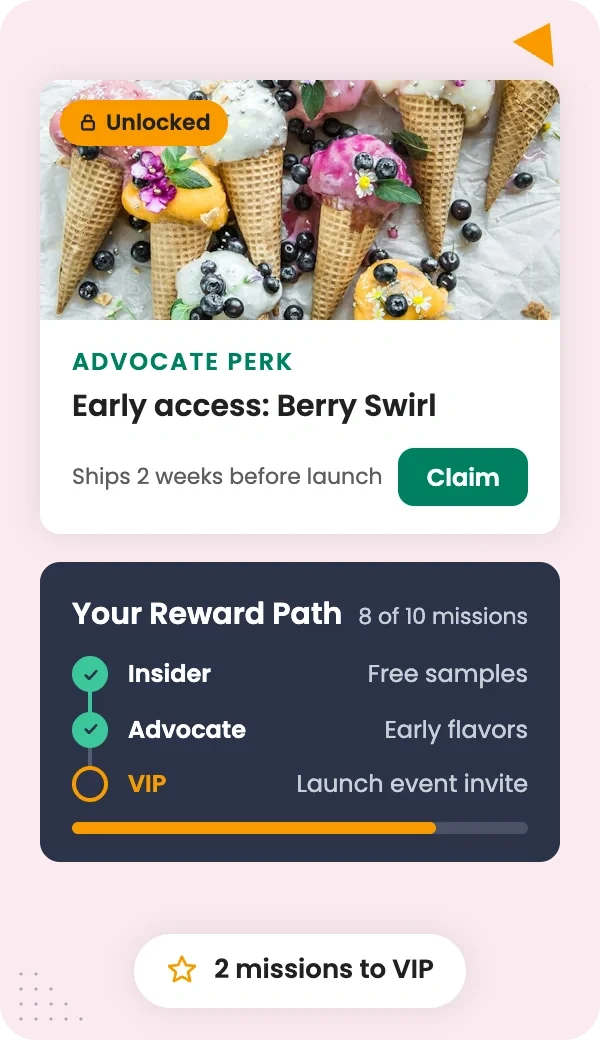
Tie free products, early flavor access, event invitations, and other perks to completed missions and contribution levels. A visible reward path gives active ambassadors something meaningful to work toward.
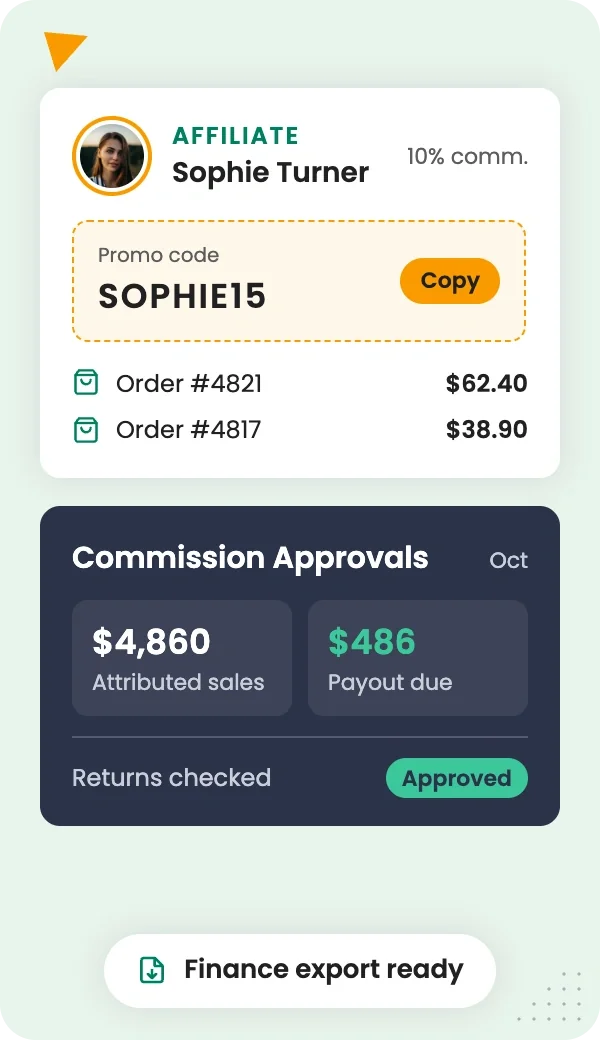
Give each ambassador a unique promo code or link and connect resulting orders to creator attribution and commission approvals. Marketing can see who influenced the sale, while finance gets a clear record of what to credit.
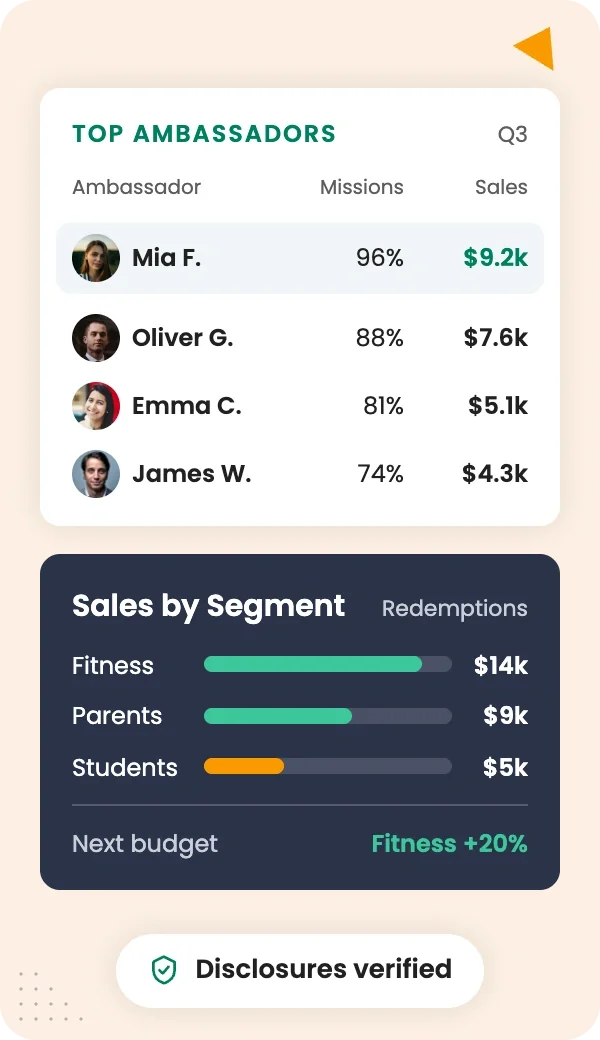
Compare mission completion, content reach, redemptions, and sales by ambassador or segment with influencer marketing analytics. Use that performance data when deciding who receives new campaigns, higher-value perks, or more budget.
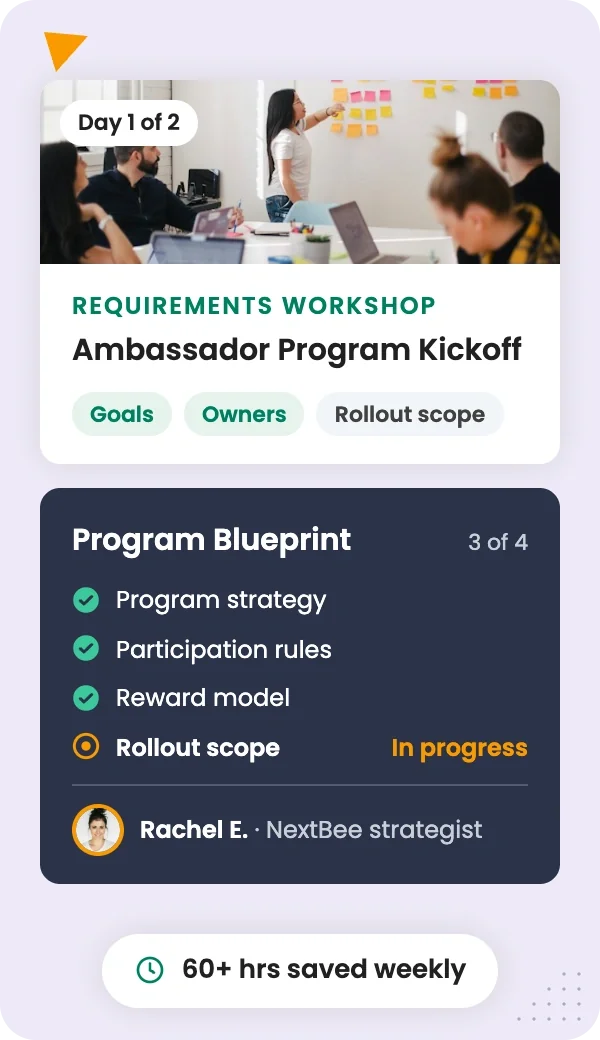
Work with NextBee on ambassador program strategy, participation rules, reward models, and rollout requirements before launch. The team helps turn your goals into a program structure your internal owners can actually operate.
60+ hours per week saved on ambassador program management
Request a Demo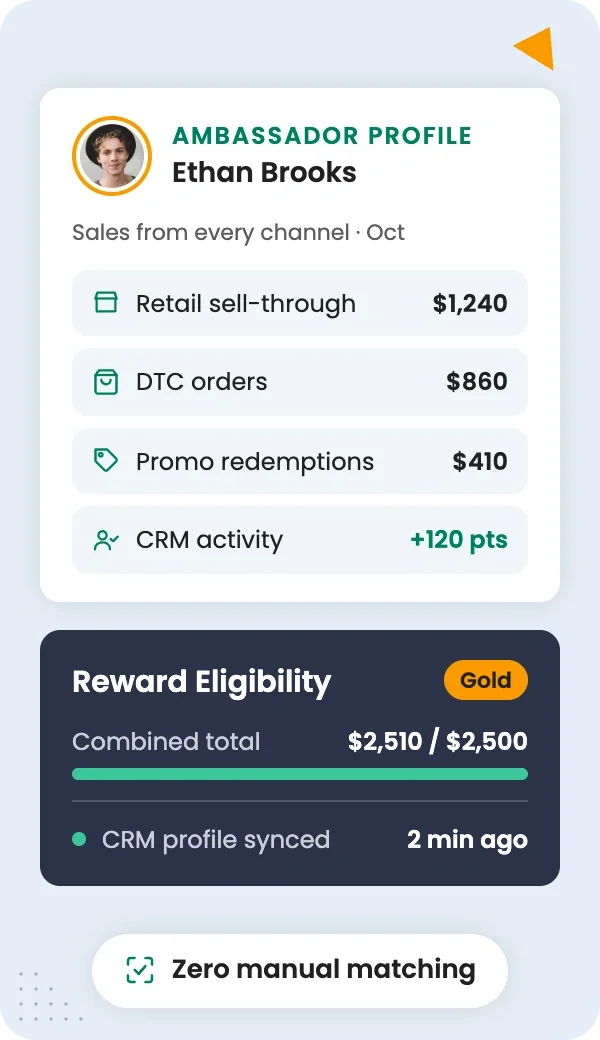
Bring retailer sell-through, DTC orders, promo code redemptions, and CRM activity into ambassador profiles and reward eligibility. Purchases from different channels can contribute to the same program record without manual reconciliation.
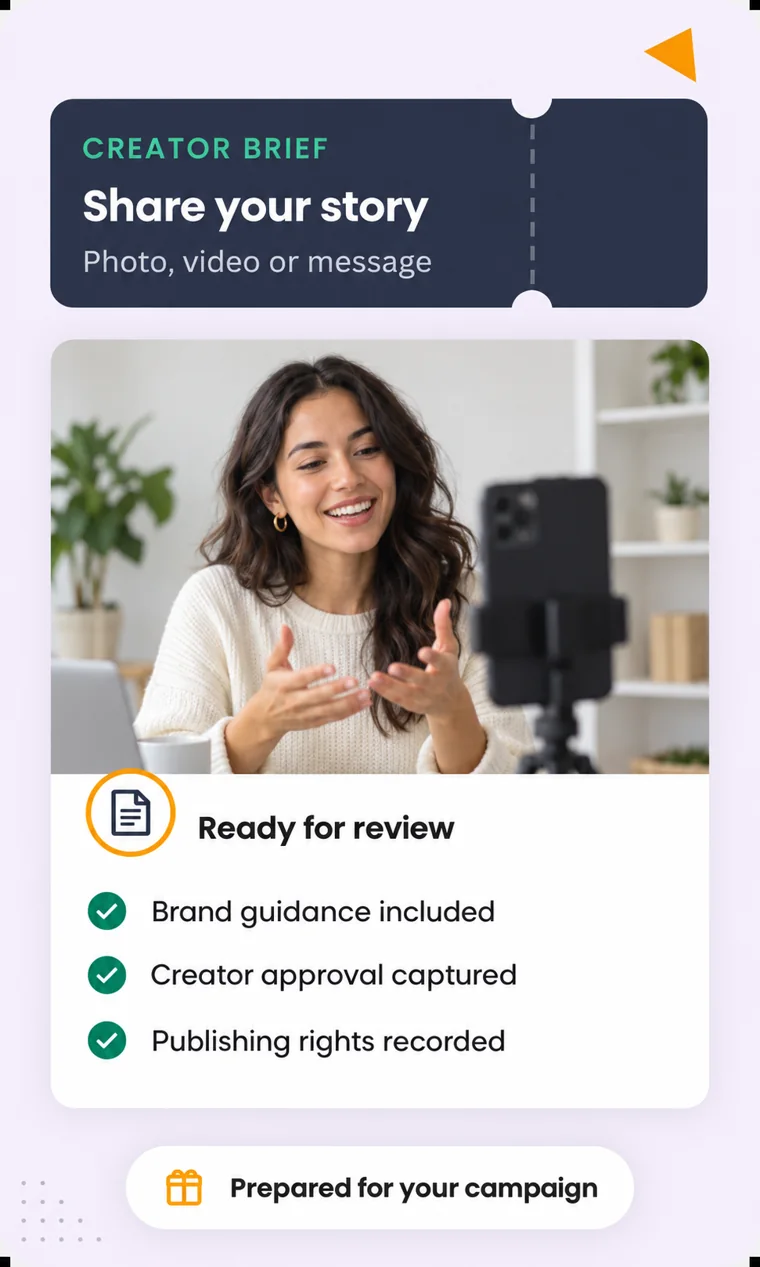
Launch fashion and cosmetics ambassador programs with product missions, content review, rights capture, and tiered perks in one platform. Give creators a steady stream of reasons to produce tutorials, try-ons, routines, and launch content.
Guide new ambassadors through brand learning, creator onboarding workflows, readiness checks, and first-mission preparation. By the time they receive a campaign brief, they already understand the products, claims, and content standards.
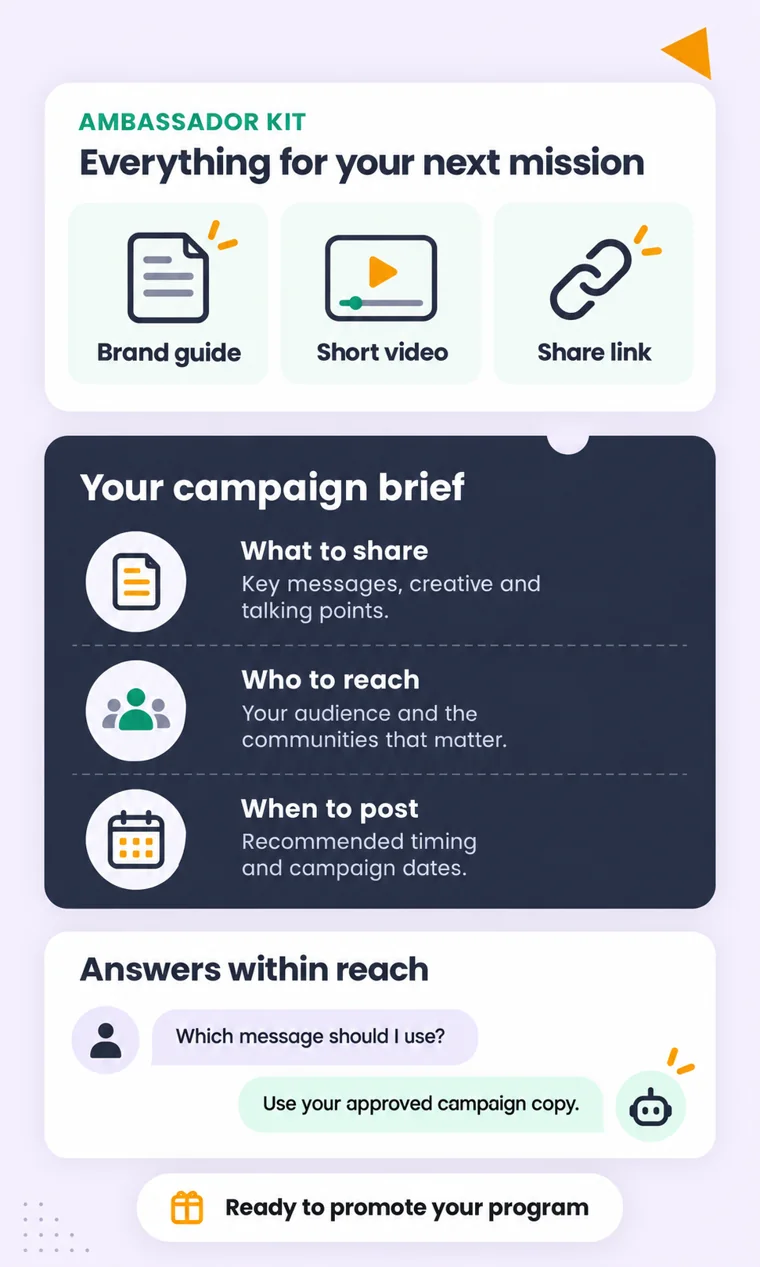
Manage influencer product seeding with creator selection, sample allocation, shipment tracking, and campaign follow-up. Focus limited samples on creators whose audience and content style fit the launch instead of sending products broadly.
Capture usage rights, approval history, and publication permissions for fashion UGC campaigns and creator content. Teams can quickly identify which assets are cleared for ads, product pages, social posts, or other reuse.
Create contribution-based tiers that unlock exclusive shades, launch previews, product access, and special experiences. Ambassadors can see how continued participation leads to better opportunities with the brand.
Connect creator affiliate software to ecommerce orders while accounting for returns, adjustments, and approved commission rules. Creators can understand what they earned without forcing finance teams to reconcile campaign spreadsheets.
Check creator posts for required disclosures, brand claims, and other review exceptions through influencer disclosure monitoring. Route flagged content to the right reviewer before small issues become recurring campaign problems.
Move participant records, program rules, content history, and campaign settings from an existing ambassador platform with a structured migration plan. Your new setup starts with the information your team already depends on.
Bring Instagram and TikTok posts into ambassador records using channel-specific campaign tracking and content evidence. Reviewers can see submitted posts directly against the mission instead of collecting screenshots from creators.
Recruit gym regulars, coaches, and local athletes into a wellness ambassador program with community missions, activity submissions, and brand review steps. Their workout stories and local credibility can extend the brand into communities traditional campaigns rarely reach.
Use a brand ambassador application form to collect training style, audience, location, interests, and relevant experience from every applicant. Standardized information makes comparison and approval easier than reviewing informal DMs or emails.
Plan fitness creator campaigns with deliverable tracking, review stages, deadlines, and campaign calendars. Your team can identify late content before an event, challenge, or product launch is already underway.
Request workout clips, transformation stories, testimonials, and progress content with consent records and review built into the submission process. Approved stories can give prospects a more relatable view of the member experience.
Connect gear, classes, event access, and other benefits to completed ambassador missions. Clear qualification rules help members understand what they have earned and what activity unlocks the next benefit.
Attach affiliate links and codes to creator challenges, posts, and campaign content through influencer sales tracking. See which creators influence memberships, gear orders, or other qualifying purchases.
Compare creator performance by channel, campaign, audience, and location. Use those findings when selecting future creators, adjusting briefs, or deciding where to expand a campaign.
Use outsourced ambassador management for mission administration, approvals, participant support, and reporting while your team retains key decisions. Internal marketers can spend more time on program direction and less on repetitive coordination.
Use check-ins, class bookings, purchases, and app activity to verify qualifying ambassador missions. Program status can update from existing member activity instead of asking participants to prove every action manually.
Organize a campus ambassador program with school-based rosters, local activity evidence, and mission assignments for each campus. Central teams can run one program while giving student reps work that fits their individual market.
250K+ student ambassadors activated for 300+ leading brands
Request a DemoSource student ambassador candidates by school, major, organization, or interest, then guide approved reps through training and certification. Recruitment and preparation happen before launch instead of competing with the first weeks of campaign activity.
Activate nano and micro creators by campus with recurring missions, contribution review, and reward choices. Local creators can cover individual schools while the central team maintains one campaign structure.
Collect student videos, campus tours, testimonials, and day-in-the-life content through approved submission workflows. Tag content by school, topic, or audience so admissions teams can quickly find stories that fit each prospective student.
Track points, swag, opportunities, and other benefits by student, campus, and term. Program owners can reward sustained contribution while still comparing activity across schools.
Assign tracking links and codes to campus ambassadors and connect them to qualifying sign-ups, applications, or orders. Weekly reporting shows which schools and individual reps are producing measurable activity.
Benchmark campus teams using sign-ups, events, missions, and content performance. The comparison makes it easier to identify where coaching, recruitment, or additional support is needed.
Use NextBee for recruitment support, training delivery, campus activation planning, and ongoing program administration. Brands can operate large student programs without building a separate field team for every school.
Send ambassador activities, applicant influence, and campaign data into Salesforce, Slate, or another admissions CRM. Admissions teams can view ambassador interactions alongside the student journey instead of keeping advocacy data separate.
Coordinate developer ambassadors, community experts, and power users with chapter participation, missions, and contribution tracking. Give technical advocates useful ways to teach, share, and represent the product beyond standard marketing campaigns.
Identify strong forum participants, open source contributors, educators, and advanced users, then invite them into a structured application process. Existing contribution history gives reviewers useful context before approving an advocate.
Manage LinkedIn creators, expert briefs, review stages, and campaign deliverables through a B2B influencer marketing platform. Product experts can create useful educational content while your team maintains control over the campaign message.
Request customer testimonials, screenshots, videos, and use-case stories through a structured UGC workflow. Tag approved assets by product, industry, or problem so sales and marketing teams can find relevant proof quickly.
Use beta access, swag, event passes, special sessions, and public recognition to acknowledge meaningful contributions. Technical advocates often value access and visibility as much as traditional rewards.
Connect advocate links, referral codes, trials, and other campaign sources to qualified opportunities or closed business. Sales teams gain another signal showing where community influence contributed to the buyer journey.
Measure influencer marketing ROI across trials, opportunities, closed deals, and other defined conversion events. Leadership can compare advocacy with other acquisition and customer marketing investments using the same business outcomes.
Compare owned program models and platform alternatives based on workflows, integrations, reporting, governance, and operating needs. The evaluation stays focused on how your team plans to run the program rather than a generic feature checklist.
Push advocate participation, referrals, and campaign activity into Salesforce and HubSpot records. Account teams can view advocacy activity beside opportunities and customer records they already use.
Invite repeat buyers and satisfied customers into an advocate program with sharing missions, ready-to-use content, and participation rewards. Post-purchase advocacy gives existing customers a structured way to recommend products they already use.
Place ambassador invitations on order confirmation pages or in post-purchase journeys when customer intent is still high. Recruitment can grow with order volume instead of depending on occasional standalone campaigns.
Assign briefs, deadlines, assets, deliverables, and review stages through influencer relationship management software. Campaign managers can see what is waiting on a creator, reviewer, or internal owner without chasing status by email.
Collect and moderate customer photos, videos, reviews, and other UGC before publishing approved assets to product pages or campaigns. Product teams can match real customer content to the SKU or collection it supports.
Use return missions, targeted offers, and segment rules to bring inactive advocates back into the program. Reactivation campaigns can focus resources on members who participated before instead of treating every dormant member the same.
Flag leaked codes, suspicious orders, self-referrals, and other exceptions before commissions are approved. Reviewers can separate genuine creator influence from transactions that should not earn credit.
Segment creator performance by first purchase, repeat purchase, returns, and other customer quality indicators. A creator who produces lasting customers can be evaluated differently from one who generates only discounted first orders.
Evaluate ambassador platforms using your actual workflows, integration needs, reporting expectations, and operating model. The decision can then reflect the program you plan to run rather than a long list of disconnected features.
Use Shopify order and customer events to support ambassador enrollment, sales attribution, and qualifying reward activity. The program can follow existing commerce events without forcing teams to maintain a separate source of purchase data.
Build a superfan marketing program with fan contribution history, advocacy missions, and milestone perks for season ticket holders and highly active followers. Give fans structured ways to represent the team even when there is no game happening.
Manage athlete applications, fan sign-ups, eligibility checks, approvals, and onboarding within one recruitment workflow. Different participant types can follow different requirements without creating separate processes for every campaign.
Coordinate athlete sponsorship campaigns with briefs, content review, usage permissions, and deliverables tied to each agreement. Sponsors can see whether required content has been submitted and approved before it goes live.
Invite fans to submit game-day photos, chants, videos, and reactions with usage consent collected at submission. Approved assets can then move into galleries, social posts, or sponsor campaigns without separate permission chasing.
Connect advocacy missions and fan contribution to meet-and-greets, signed gear, early ticket access, and other high-value experiences. Recognition can reflect the fan's history with the program instead of a single transaction.
Calculate athlete commissions from qualifying merchandise or ticket sales using creator commission management and tracked links. Each partner can see which transactions contributed to approved earnings.
Manage approved briefs, disclosure cues, training records, and content review requirements through ambassador compliance workflows. Program owners can document the steps taken before sponsored content is approved.
Use managed program support for athlete onboarding, deliverable oversight, approvals, and sponsor reporting. Internal teams can retain strategic control while recurring coordination moves to a dedicated operating team.
Connect ticket purchases, merchandise orders, social activity, and fan records to ambassador or athlete profiles. Program activity can reflect multiple types of fan engagement without keeping separate spreadsheets for each channel.
Deploy street teams with field mission briefs, location evidence, campaign schedules, and follow-up journeys for tours, premieres, and festivals. Local teams can execute market-specific activity while central owners track the full campaign.
Publish open calls by city or event and route applications to the right local reviewers. Each market can fill its roster while corporate teams keep the recruitment process consistent.
Organize creators into campaign teams with shared briefs, group submissions, deliverables, and recognition for launches or tours. A coordinated creator group can support the same release across multiple platforms and audiences.
Collect audience reactions, show clips, photos, and premiere content with rights capture included in the workflow. Approved material can move into trailers, social posts, or campaign creative without restarting the permission process.
Exchange completed missions for backstage access, merchandise, early tickets, and other campaign-specific perks. Participants can see how their field work contributes to the experiences they want most.
Track ticket and merchandise orders through team links and promo codes, then report results by city or participant. Promoters can compare local campaign effort with actual commercial response.
Review street team activity, creator reach, ticket response, and other campaign measures by city. Those results give planners a stronger basis for deciding where to recruit, invest, or adjust the next tour.
Define city rosters, mission calendars, reward budgets, and local responsibilities with NextBee before campaign activity begins. Each market starts with a clear operating plan instead of building its own process independently.
Bring ticket orders, promo codes, event check-ins, and other qualifying activity into street team attribution. Campaign managers can see participant impact without waiting for end-of-tour reconciliation.
Manage guides, instructors, retail staff, and industry professionals through a structured professional ambassador program. Their field experience gives customers product recommendations grounded in real use.
Check licenses, employer information, professional status, and other eligibility evidence through pro purchase program workflows. Approved benefits go to the professional audience the program was designed to reach.
Allocate demo gear using creator selection rules, shipment tracking, campaign briefs, and review follow-up. Product teams can reserve limited inventory for creators whose expertise and audience fit the category.
Collect trail photos, trip reports, field videos, and other outdoor content with usage rights stored against each asset. Marketing teams can quickly identify content cleared for catalogs, product pages, or seasonal campaigns.
Apply purchase benefits, discount tiers, qualification rules, and annual renewals through pro deal program management. Each professional can receive the right program access based on current eligibility.
Place affiliate links in gear reviews, field reports, and creator content, then verify attribution against qualifying orders. Brands can measure how expert recommendations translate into commerce.
Compare pro purchases, ambassador activity, content reach, and campaign costs by region or participant segment. This gives program owners a clearer view of both commercial and advocacy contribution.
Define program goals, participant criteria, reward economics, operating requirements, and relevant ambassador examples in one proposal. Leadership gets a clearer picture of what the program will cost, require, and aim to achieve.
Bring commerce events from BigCommerce, WooCommerce, or other stores into pro deal and ambassador reward workflows. Order status and product data can support qualification without manual purchase checks.
Give each location a local ambassador workspace with approved campaign briefs, participant activity, and brand review rules. Local voices can create relevant neighborhood content without giving up central brand control.
Provide franchisees with approved recruitment templates, application forms, screening rules, and onboarding paths. Individual locations can recruit locally without inventing their own program process.
Match local creators to individual locations and manage regional briefs, deliverables, and reporting through one program. Each store can work with relevant neighborhood voices while corporate teams retain campaign visibility.
Route approved customer and ambassador content into location-specific libraries after corporate review. Local teams receive content they can actually publish without searching through unrelated national assets.
Assign reward budgets to individual locations while keeping corporate limits on eligibility, values, and approval. Franchisees gain flexibility to recognize local advocates without losing national oversight.
Map ambassador links and codes to specific locations and qualifying transactions. Each franchise can see which local participants influence sales without mixing results with other stores.
Roll local program activity into regional and national reporting while preserving store-level detail. Corporate teams can identify strong markets and share proven tactics with locations that need support.
Package recruitment, training, campaign templates, operating rules, and rollout support for every franchise. New locations can adopt a proven setup instead of recreating the program from scratch.
Route local sales, CRM records, ambassador codes, and ecommerce activity to the correct franchise profile. Reporting stays separated by location while corporate still receives an overall program view.
Equip volunteers with campaign briefs, advocacy missions, and participation milestones through a nonprofit ambassador program. Supporters receive specific actions they can take instead of simply being asked to “spread the word.”
Guide new ambassadors through mission training, story guidelines, participation expectations, and a first campaign task. Early structure helps volunteers understand how they can contribute without requiring constant staff direction.
Organize creators and volunteers into collaborative campaigns with shared goals, team challenges, and coordinated content tasks. Giving-day participation becomes a group effort rather than a set of disconnected individual posts.
Collect supporter and beneficiary stories with permissions, review steps, and approved publishing status attached to each submission. Communications teams can reuse credible stories while respecting how each participant agreed to be represented.
Recognize contribution milestones with badges, public acknowledgments, event access, or other non-cash benefits. Volunteers can see their effort being noticed without turning participation into a purely transactional program.
Give fundraisers personal giving pages and tracked links so donations can be connected to individual ambassador activity. Program teams can identify strong fundraisers and share their successful tactics with others.
Report funds raised, volunteers recruited, content shared, and other campaign outcomes by ambassador or initiative. Leadership receives a clearer picture of advocacy contribution beyond simple participant counts.
Define recruitment, training, mission structure, recognition, and operating responsibilities before launch. Smaller nonprofit teams can establish the program without learning every process through trial and error.
Bring fundraising, volunteer, and ambassador activity into Blackbaud, Salesforce Nonprofit Cloud, or another donor CRM. Development teams can view ambassador influence next to the donor records they already manage.
Create a patient ambassador program with consent workflows, story review, participant preferences, and approval history for each storyteller. Program teams can support authentic patient voices while respecting how and where each person agreed to participate.
Guide patient and caregiver ambassadors through consent training, speaking expectations, support contacts, and participation guidelines before any public activity. Participants know what is expected and who to contact if they need help or want to change their involvement.
Route patient creator content through consent checks, medical-legal review steps, and approved recognition workflows before publication. Each submission follows the review path established for the program rather than relying on informal approvals.
Store patient stories with usage permissions, consent renewals, publication history, and review decisions attached to the asset. Teams can see whether a story remains approved before reusing it in a new channel or campaign.
Configure recognition based on approved program rules and individual participant preferences. Thank-you journeys can acknowledge contribution without forcing every advocate into the same reward model.
Track approved referral activity from patient ambassadors using privacy-conscious attribution and controlled data access. Program owners can evaluate influence without exposing unnecessary participant information.
Maintain consent records, publication history, review decisions, and other program documentation for each patient story. Teams can retrieve a clear approval history when they need to review how an asset was used.
Define consent, review, participant support, recognition, and operating responsibilities before the program launches. NextBee helps translate those requirements into a repeatable workflow for the teams running the program.
Exchange consent records, CRM contacts, content approvals, and program activity through controlled integrations and secure APIs. Access rules determine which systems and teams receive each type of information.
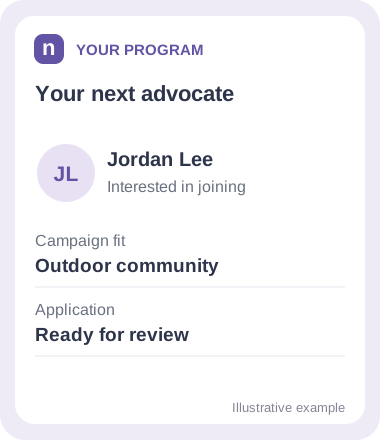
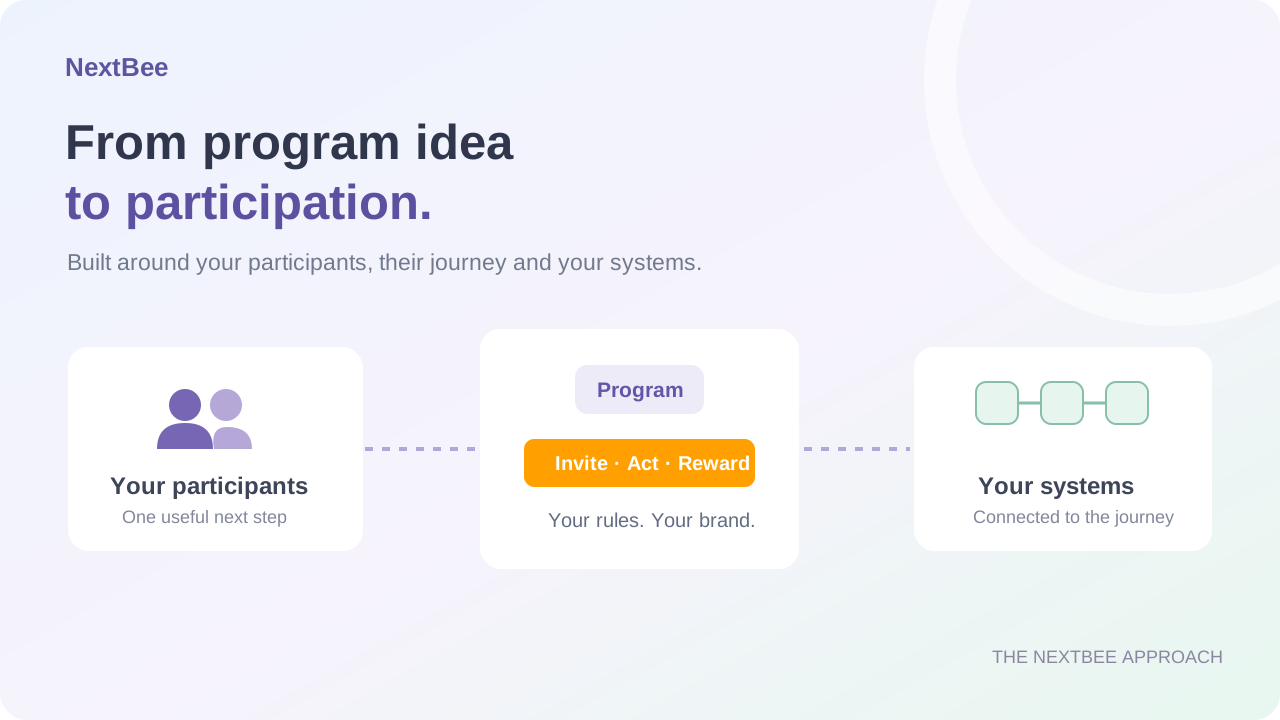
Give prospective advocates a clear application and a reason to join. Review their interests, audience and suitability before inviting them into the missions that fit your program.
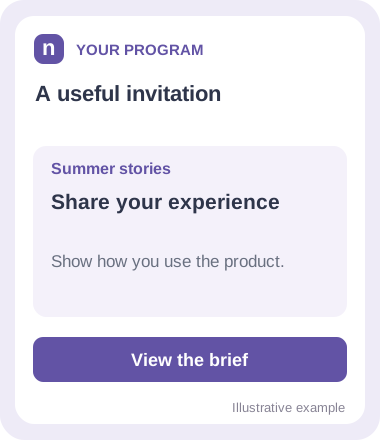
Turn campaign goals into specific invitations, content briefs and shareable materials. Participants can see what to do next, while your team follows submissions and approves contributions.
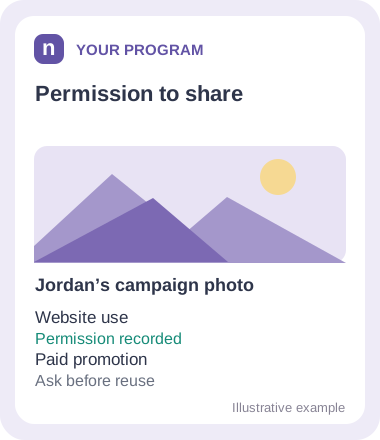
Ask for the permissions your campaign needs and keep each response with the submitted content. Your team can review approved uses before publishing a photo, testimonial or video.
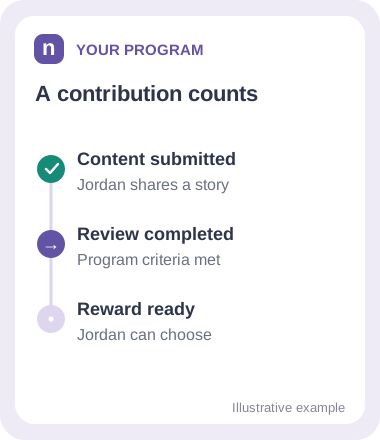
Connect rewards to the actions your program values, from accepted content to qualified referrals. Make eligibility and reward status visible so advocates understand how their contribution counts.
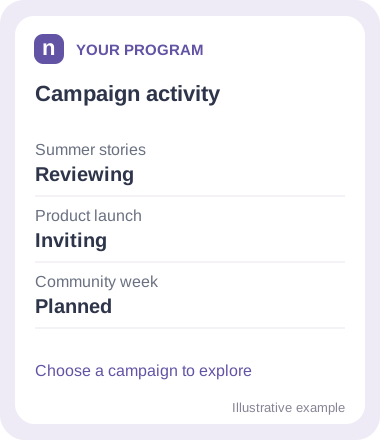
Bring tracked links, accepted submissions and qualified outcomes into a useful program view. Compare activity across campaigns and use the findings to shape the next invitation.
NEW Agentic Studio
Bring your program rules and business context. Shape a playbook with your team, then put agents to work preparing campaigns, useful assets and your next growth opportunity.
Lifetime Engagement prepares promotional assets. Opportunity Miner finds new program opportunities. Data Wrangler checks connected data. Tribe Leader Support equips your advocates.
See Agentic Studio in action →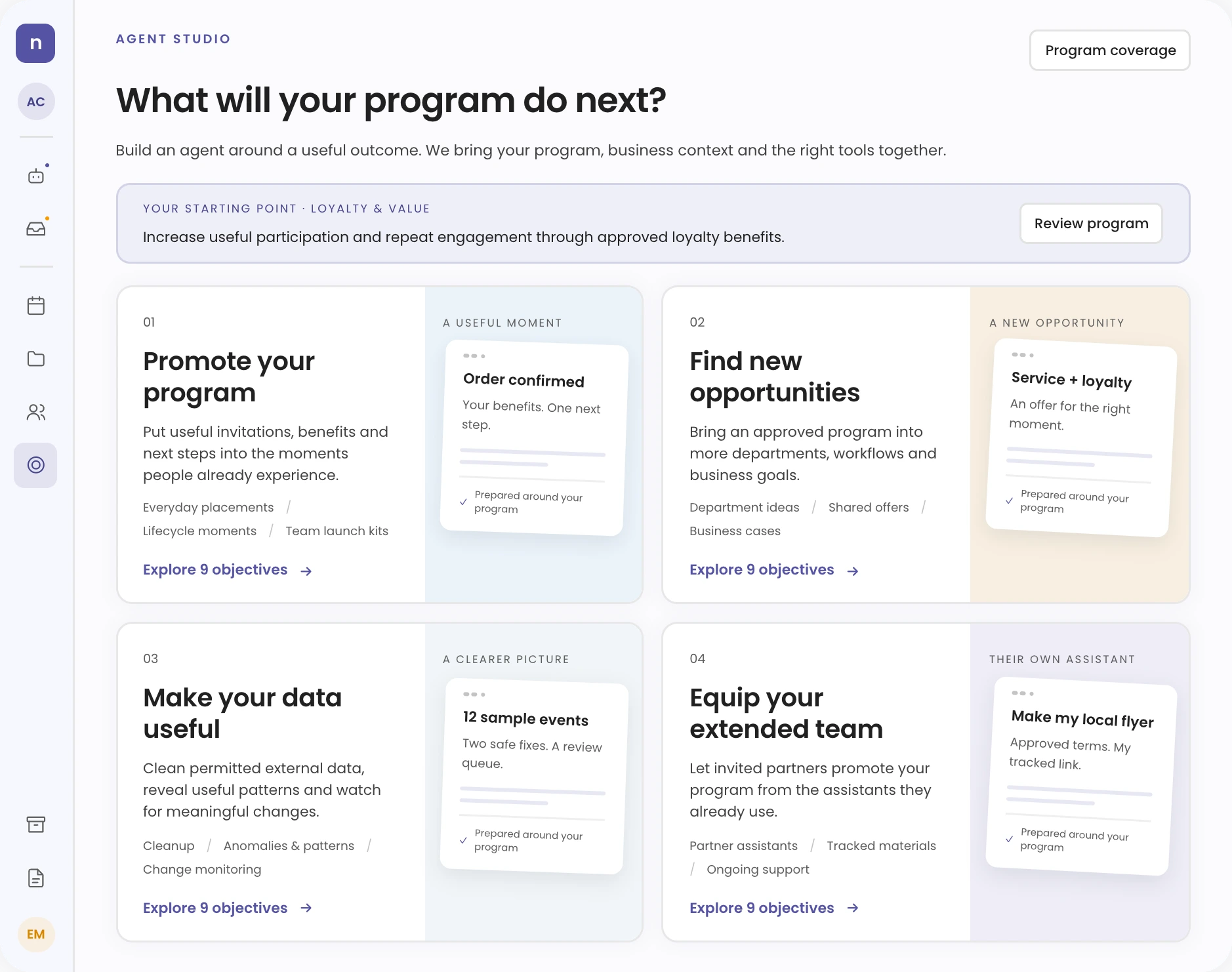
EXPLORE WITH YOUR LIFETIME ENGAGEMENT AGENT
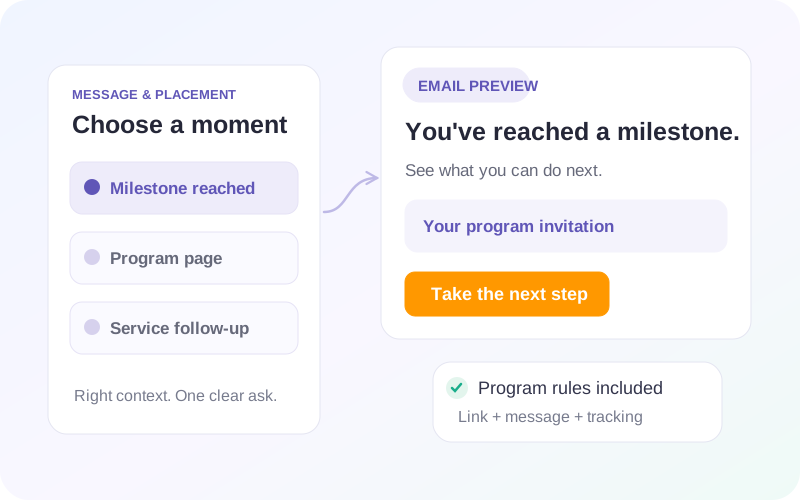
What should you tell ambassadors during a platform migration?
A prioritized message launch checklist that drives ambassadors re-activated on the new platform within 30 days.
EXPLORE WITH YOUR LIFETIME ENGAGEMENT AGENT
What terms should a Marketing Operations Manager know for ambassador program migration?
Give marketing operations a shared migration vocabulary, covering program design, finance, data and the metrics your team needs to compare before and after cutover.
EXPLORE WITH YOUR OPPORTUNITY MINER AGENT
What is ambassador program migration?
Ambassador program migration is moving an existing ambassador program to a new platform without losing ambassadors or balances.
EXPLORE WITH YOUR OPPORTUNITY MINER AGENT
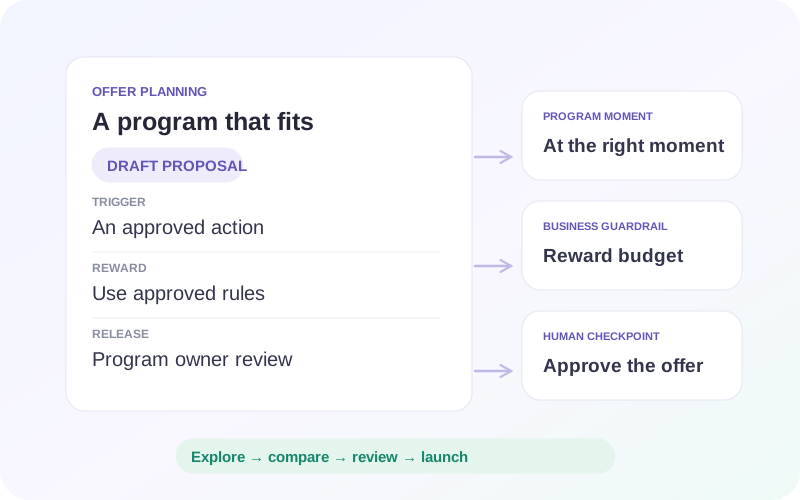
How do you migrate an ambassador program from a legacy platform without losing balances or active ambassadors?
Ambassador program migration from a legacy platform runs in nine steps: inventory, export, field mapping, balance reconciliation with finance, rule rebuild and simulation, code, link and consent transfer, ambassador re-invite, parallel run, and verification with decommissioning. The Brand Ambassador Program Manager owns the plan, and success is judged by ambassadors re-activated on new platform within 30 days.
EXPLORE WITH YOUR OPPORTUNITY MINER AGENT
How does an influencer marketing manager move an ambassador program from DMs and email threads onto a platform without disputes over what is owed?
Moving an ambassador program off DMs and email is an ambassador program migration in which the hardest asset to move is the record of what each creator was promised. An Influencer Marketing Manager rebuilds that record from threads and spreadsheets, asks ambassadors to confirm it on their new profile page, and uses the move to win back creators who went quiet.
EXPLORE WITH YOUR OPPORTUNITY MINER AGENT
If we already run a customer insight community, does migrating our ambassador program onto that shared foundation shorten days from contract to first live mission?
Whether ambassador program migration onto your insight community's foundation shortens days from contract to first live mission depends on four factors: member overlap, reusable consent and identity, portable reward rules, and research-integrity risk. When overlap and consent reuse are high, the Marketing Operations Manager skips rebuilding sign-in, messaging and preference centers and reaches the first live mission sooner.
EXPLORE WITH YOUR OPPORTUNITY MINER AGENT
Can an ambassador program migration strengthen a consumer brand's competitive position, or does switching platforms put its creator community at risk?
Yes, when it is run to protect the assets competitors cannot buy: an engaged creator roster, earned tiers and history, rights-cleared content and first-party data. A careless ambassador program migration does the opposite, raising ambassador churn during transition just as rival brands court the same creators, so the Head of Community should treat the switch as a retention event, not an IT project.
EXPLORE WITH YOUR OPPORTUNITY MINER AGENT
How should a marketing operations manager score vendors for an ambassador program migration?
This scorecard template lets a Marketing Operations Manager rate ambassador program migration vendors on twelve weighted criteria, from balance import and rule rebuild to consent transfer and days from contract to first live mission. Each criterion carries a weight variable, 1-3-5 descriptors, the evidence to request and a scripted demo task run on your own sample data.
EXPLORE WITH YOUR DATA WRANGLER AGENT
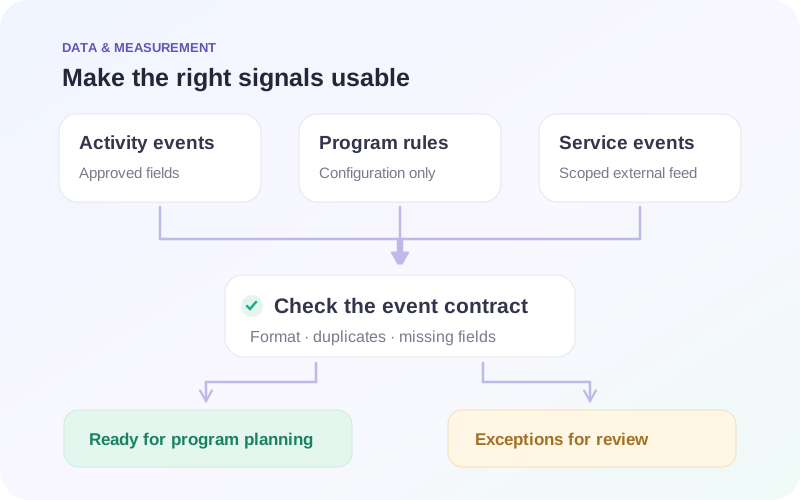
What compliance rules apply to ambassador program migration?
Migration must carry consent, disclosure records and balances intact; compare re-consent vs transfer approaches.
EXPLORE WITH YOUR DATA WRANGLER AGENT
How do you reconnect ERP and other systems during ambassador program migration?
Map ERP integration triggers before cutover, work through event-sync examples and agree the checks that keep your ambassador program connected during migration.
EXPLORE WITH YOUR DATA WRANGLER AGENT
What should a Head of Community track weekly after an ambassador program migration?
Track ambassador churn during transition with re-activation and dispute metrics.
EXPLORE WITH YOUR TRIBE LEADER SUPPORT AGENT
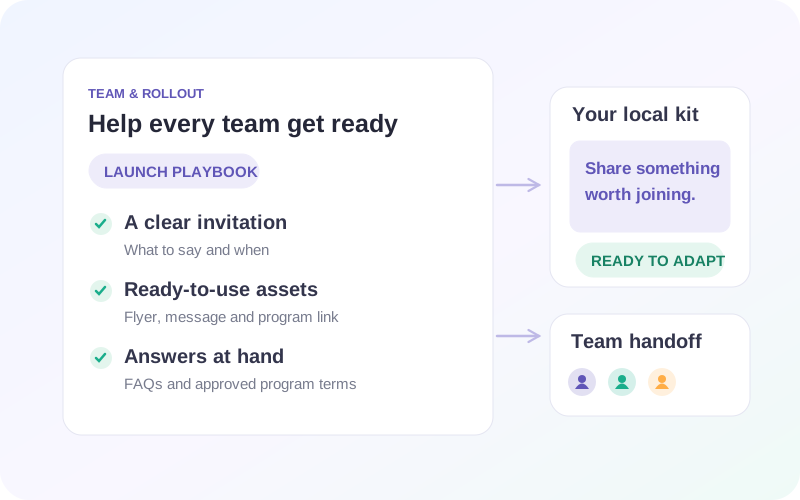
Which parts of an ambassador program migration should a marketing technology manager outsource to a managed service, and which should stay in-house?
Most teams keep strategy, consent decisions and finance sign-off in-house and outsource the labor-heavy middle of an ambassador program migration: data mapping, mission and reward rule rebuilds, ambassador support and win-back outreach. The Marketing Technology Manager stays accountable for cutover and for the share of missions and reward rules rebuilt before cutover.
EXPLORE WITH YOUR TRIBE LEADER SUPPORT AGENT
What team, budget lines and reward budget does a brand ambassador program manager need to plan for an ambassador program migration?
Plan an ambassador program migration with three core formulas: one-time migration cost, carried reward liability plus win-back reward budget, and staffing hours by phase. A Brand Ambassador Program Manager sizes each from named inputs such as active and dormant ambassador counts, rules to rebuild and parallel-run overlap, then sets a target for ambassadors re-activated on new platform within 30 days.
EXPLORE WITH YOUR TRIBE LEADER SUPPORT AGENT
Who should own an ambassador program migration, and how does ownership pass between teams from planning to post-cutover?
Ownership of an ambassador program migration should sit with one accountable leader, here the Influencer Marketing Manager who already runs the ambassador roster, while Marketing Operations and Marketing Technology do the build and finance approves every migrated balance. Ownership shifts by phase, and the cleanest test of the model is the share of balances migrated without disputes.

Customer Perspective
If you're looking for a powerful platform to run your loyalty and promotions initiatives, NextBee should be your first choice.
Mary Velosky
Executive Vice President · Eniva Health
Compare related approaches and choose the ideas you want to see in your demo.
Coordinate ambassador enrollment, missions, submissions and rewards in a branded program.
Explore this use case →Coordinate student brand reps across campuses with local missions and digital campaigns.
Explore this use case →Help universities organize student ambassadors for prospective-student engagement.
Explore this use case →Give nonprofit advocates ways to share campaigns, volunteer and recruit supporters.
Explore this use case →Help new ambassadors understand the brand, complete setup and start their first missions.
Explore this use case →Invite inactive advocates back with relevant missions, recognition and clear next steps.
Explore this use case →Connect Shopify customer and order activity to branded ambassador missions and rewards.
Explore this use case →Coordinate Instagram, TikTok and video-platform participation within a branded program.
Explore this use case →Launch and operate ambassador campaigns with software and coordinated program support.
Explore this use case →Compare ambassador tools around ongoing missions, content review and participation rewards.
Explore this use case →Define advocate audiences, mission workflows and reward requirements for your next program.
Explore this use case →Build ambassador programs for developer, technology and customer communities.
Explore this use case →Bring your program brief, integration questions and rollout priorities. Work through the choices with a team that connects strategy, program operations and implementation.

Head of Strategic Partnerships
Give each ambassador an approved flyer, a useful message and an attributed link for the community they know.

Client Relations Director
Build a short sequence of product stories or useful demonstrations instead of asking creators for repeated generic posts.

Communications Director
Offer a limited-edition benefit for clearly qualified participation, with availability and eligibility stated up front.

Customer Experience Lead
Help ambassadors select relevant campaign moments and prepare the approved resources before the promotion begins.