Sales Gamification Software
Turn approved sales activities and milestones into challenges, progress and recognition.
Explore this use case →
Sales Leaderboard Software
Use sales leaderboard software to show sales activity, milestones and team progress with leaderboards for your sales floor.
Show live rankings to everyone
Display CRM-based rankings on sales floor screens, so reps always see exactly where they stand today.
Celebrate every win instantly
Lift team energy by announcing closed deals on screens and feeds the moment they happen.
Keep reps motivated every month
Reset leaderboards each period to give every rep a fresh chance to reach the top.
✓ SOC 2 Type IITrusted by 300+ brands



NextBee delivered the right platform and the right partnership. Their comprehensive solution and collaborative approach helped us grow participation from an original goal of 10% to 35% of our customer base.
The team has helped us scale the referral program to multiple markets including US, Japan, Australia, Singapore.
As a trusted partner, the Nextbee team has consistently delivered reliable and responsive service in support of Just Energy's digital gift card program.
If you're looking for a powerful platform to run your loyalty and promotions initiatives, NextBee should be your first choice.
An ROI positive program is not just a buzzword, but a commitment we stand by.




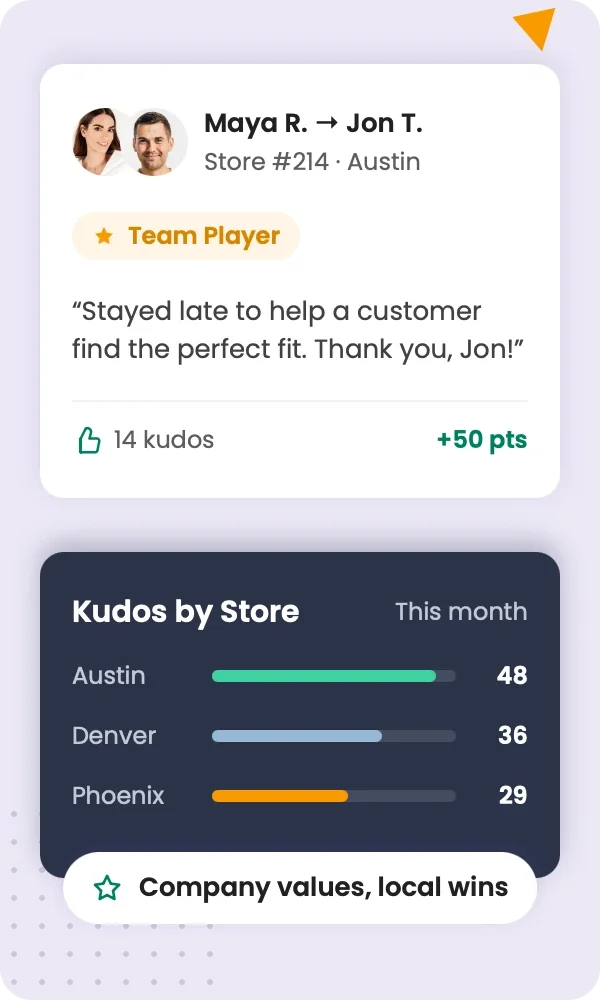
Give managers and coworkers an easy way to recognize service, teamwork, product knowledge, and everyday contributions. Set company-wide standards while giving each store room to celebrate the work that matters locally.
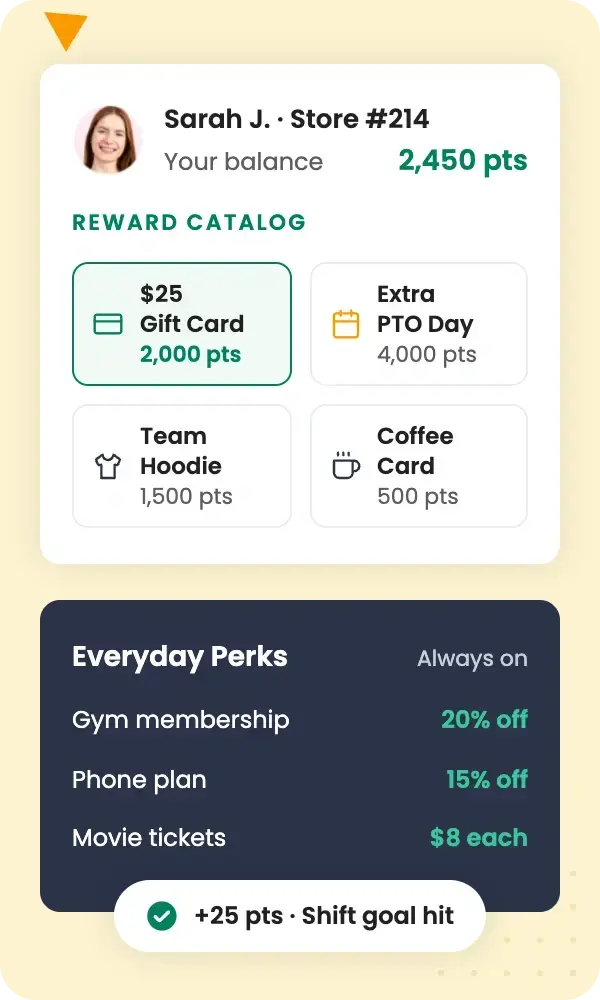
Award points for approved achievements and let employees choose from a branded reward catalog. Add employee perks and corporate discounts when you want to offer benefits that do not depend on performance.
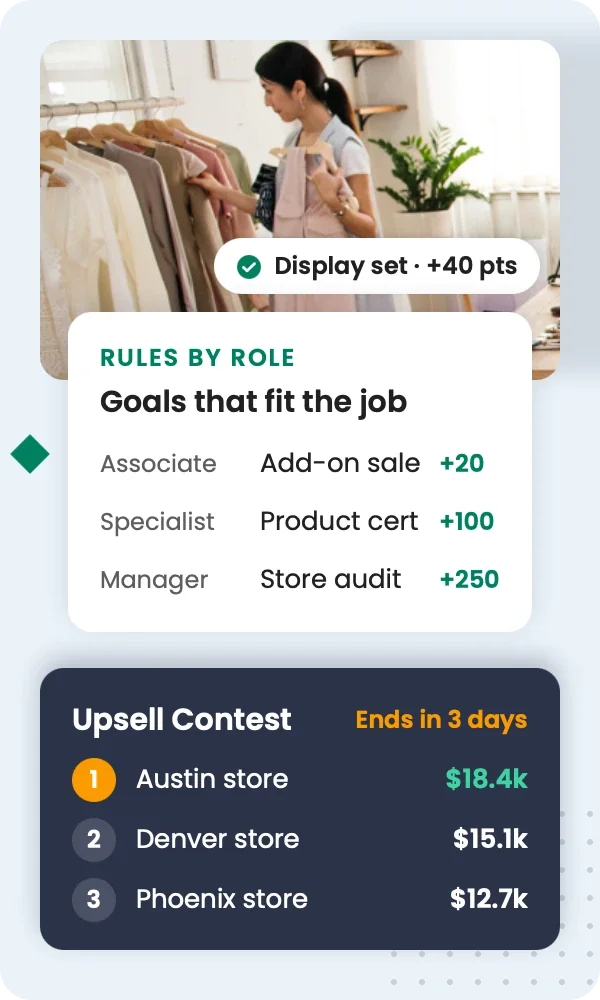
Create retail employee incentive programs for service, product knowledge, sales, and store execution. Set separate rules for associates, specialists, and managers so each role works toward relevant goals.
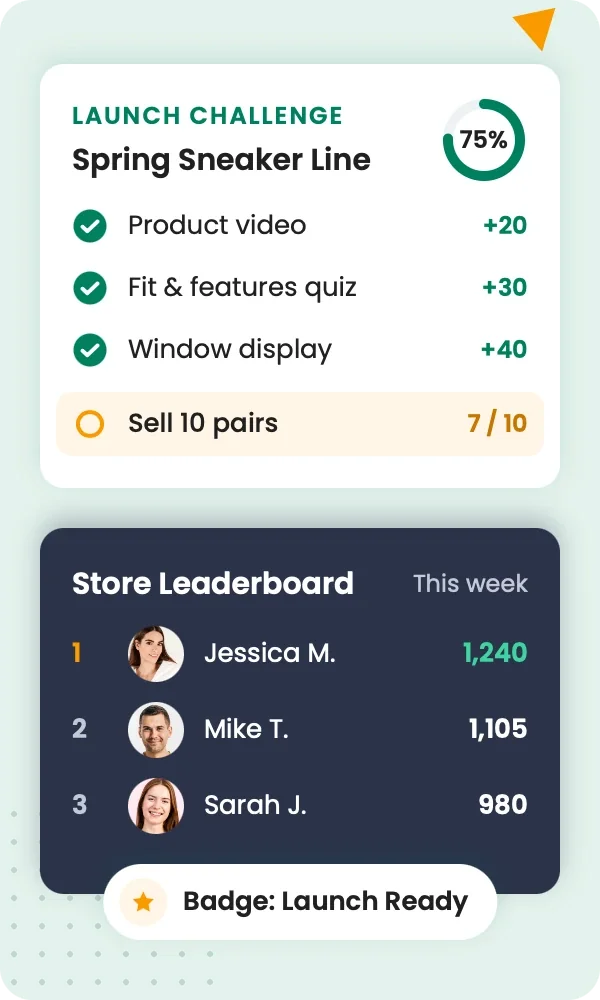
Turn product training and existing KPIs into challenges, scorecards, badges, and leaderboards. Use short campaigns to help teams learn new products, improve launch readiness, or focus on a specific store priority.
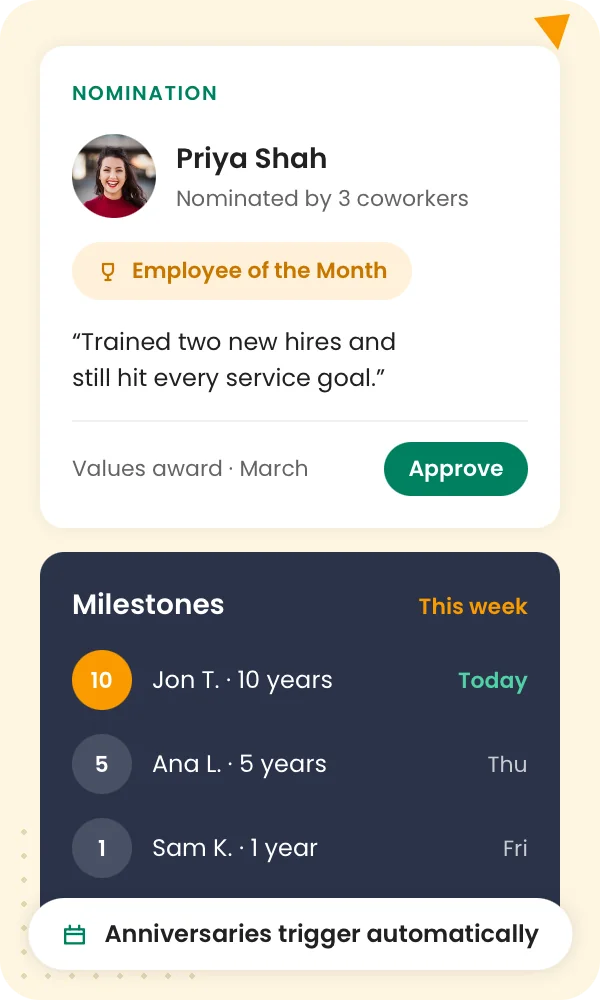
Invite managers and employees to nominate coworkers for monthly, service, or values-based awards. Use employment dates to trigger work anniversaries and years-of-service recognition automatically.
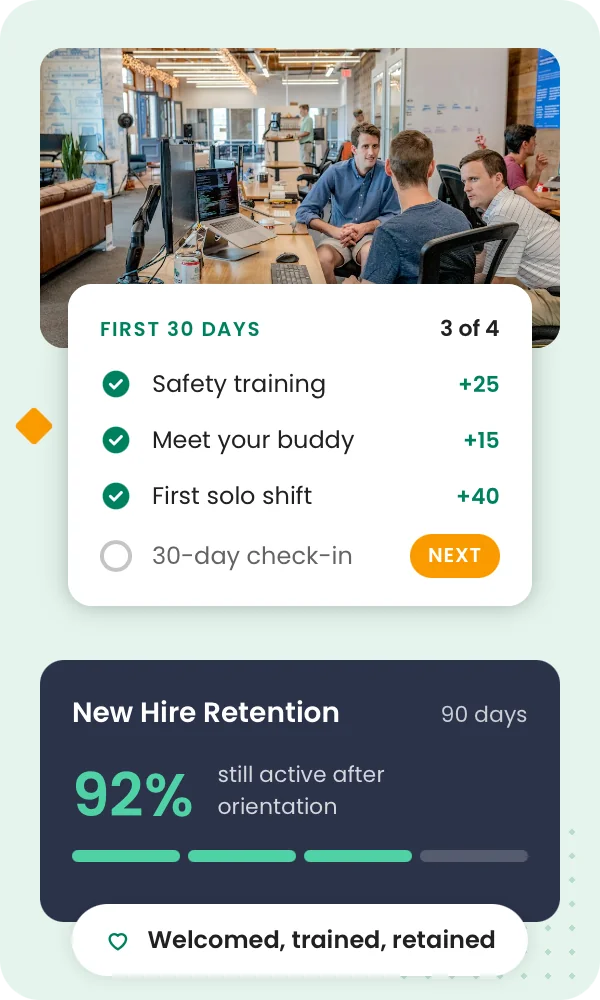
Guide new hires through training, first-week tasks, and early milestones with a clear onboarding journey. Continue with appreciation, employee communities, and retention activities once they settle into the role.
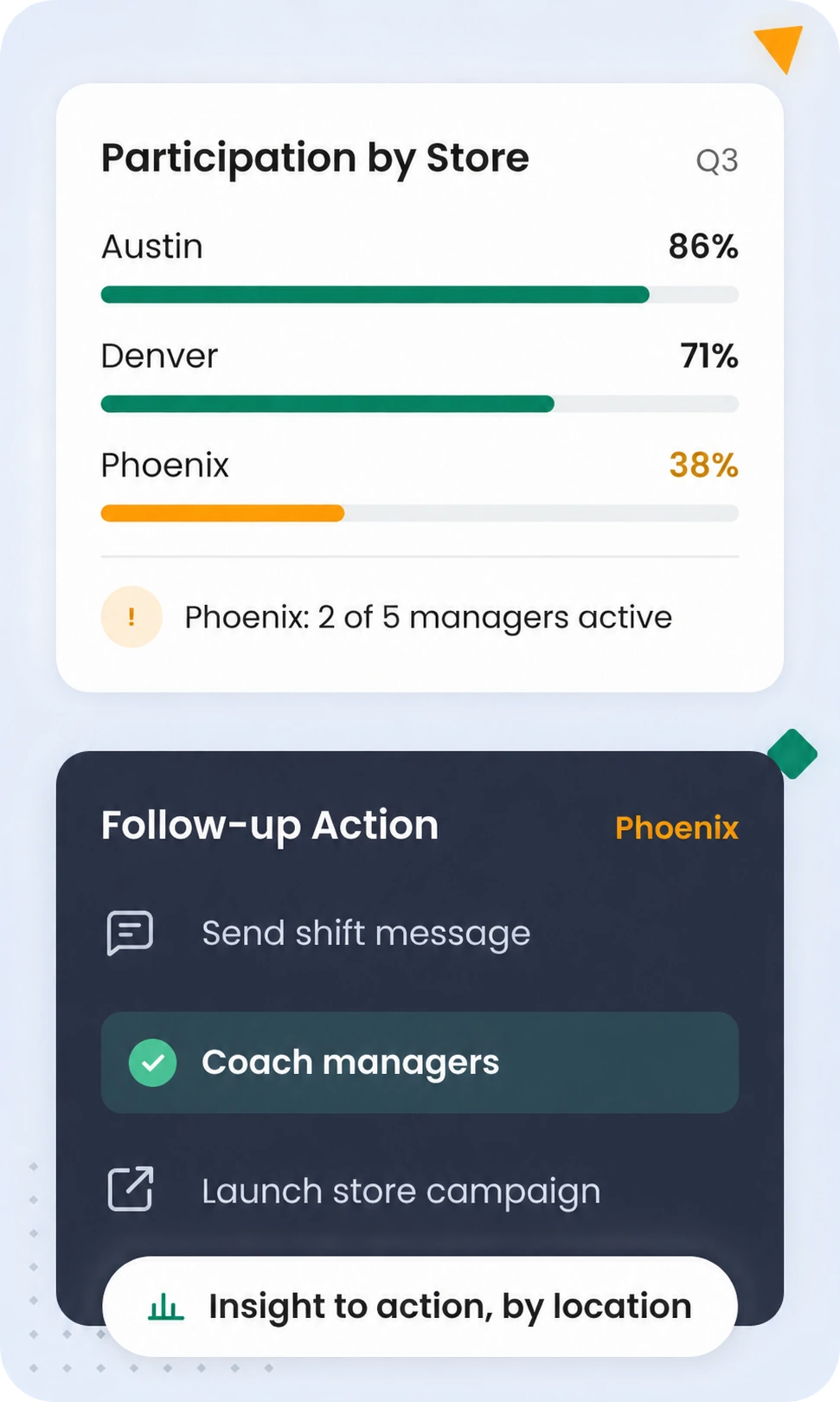
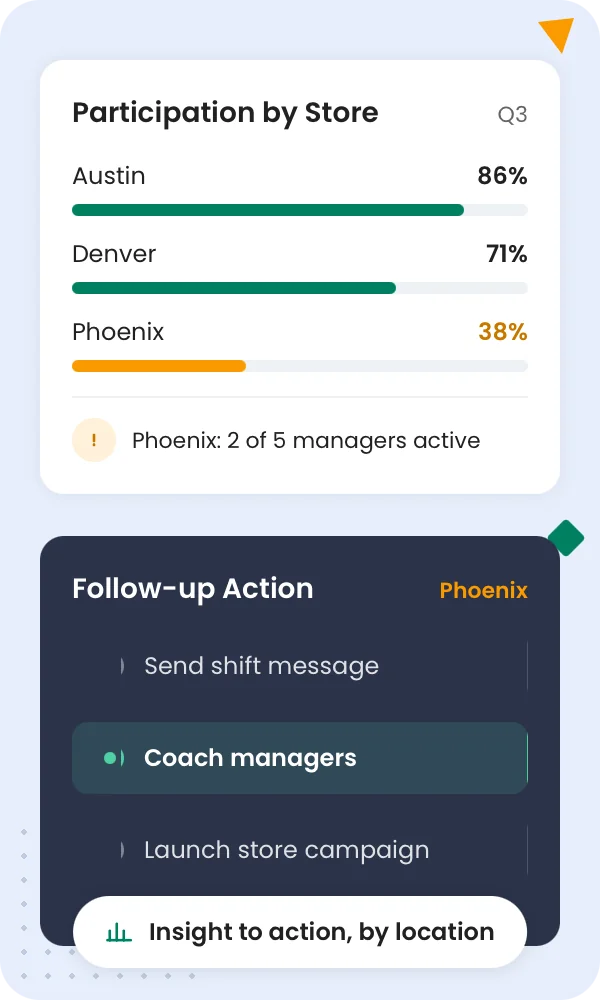
Compare recognition reach, manager activity, reward use, and campaign participation by store or region. Turn employee feedback into clear follow-up actions when a location needs more support.
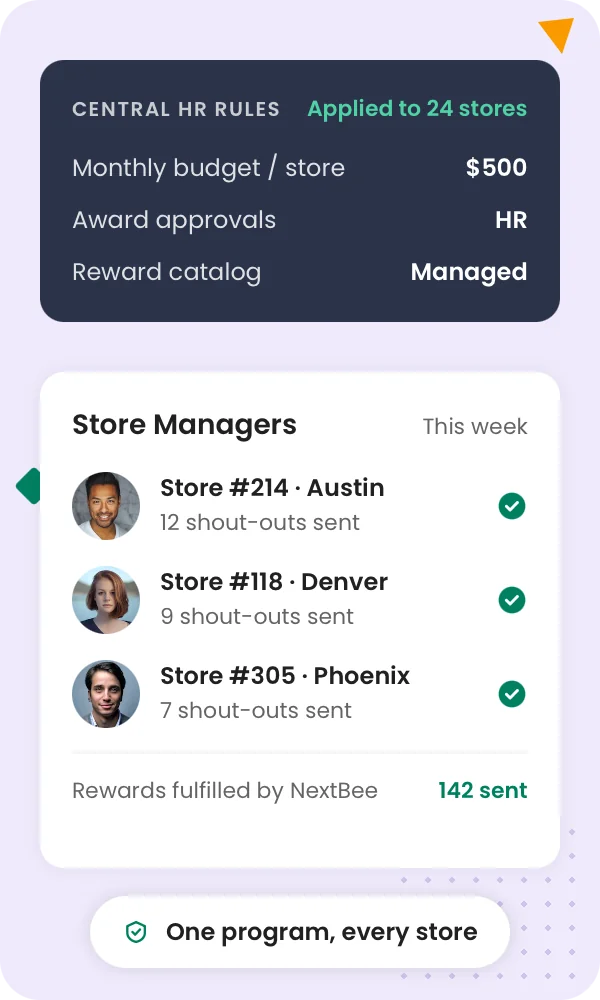
Work with NextBee on program design, setup, recurring administration, reward operations, and reporting. Your central HR team keeps control of the rules while store managers focus on their employees.
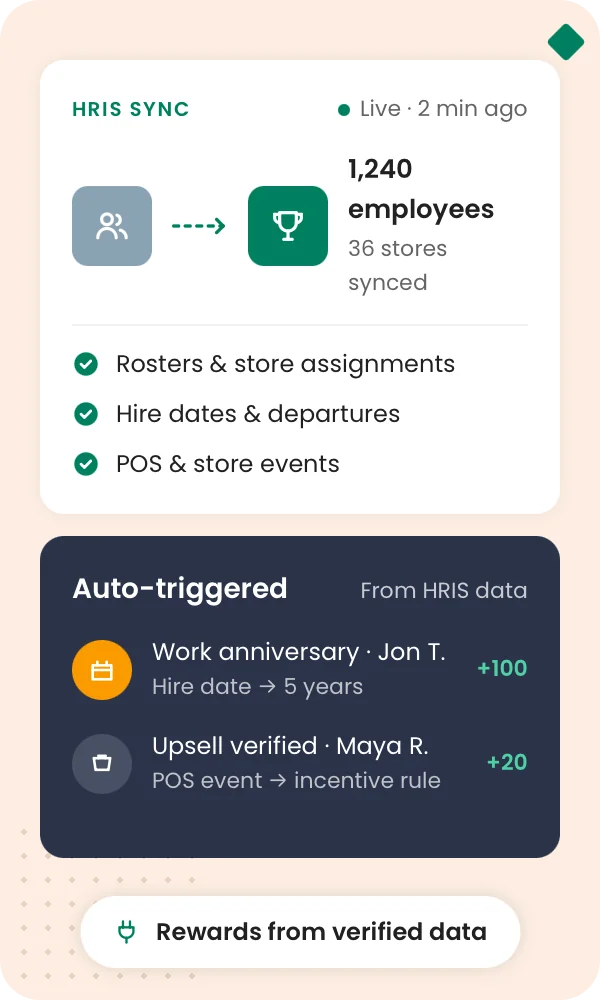
Sync employee rosters, store assignments, hire dates, departures, and milestones from your HRIS. Bring approved POS or store events into incentive rules when they help verify a qualifying action.
Give managers and crew members a simple way to thank members for service, teamwork, reliability, and learning. Keep the same program rules across locations while letting each restaurant highlight its own members.
Award points for approved achievements and give employees clear reward choices. Use one rewards experience across locations instead of asking every restaurant to manage gifts separately.
Create restaurant employee incentives for learning, customer service, product knowledge, and selected commercial goals. Set different qualification rules for crew members, shift leaders, and managers.
Create team challenges for training, service initiatives, launches, or other short-term goals. Show progress by shift or location so employees know what the team is working toward.
Collect nominations for employee of the month, guest service, teamwork, and leadership awards. Use service dates to manage years-of-service recognition without depending on manager reminders.
Guide new employees through training, role readiness, and first-month tasks with a simple progress path. Keep them involved later with appreciation, recognition milestones, and employee engagement activities.
See which locations use recognition, rewards, challenges, and manager tools most consistently. Connect employee feedback to visible follow-up when recurring issues appear.
Use NextBee for setup, program administration, reward operations, and recurring reporting. Give local leaders an easy way to participate without making every restaurant manage the program itself.
Sync hires, departures, locations, and service dates from your workforce systems. Trigger anniversaries, onboarding steps, and access changes from trusted employee data.
Give managers, coworkers, and guests ways to recognize helpful staff. Route approved guest compliments into employee recognition while keeping public reviews separate.
Award points for approved achievements and let employees choose from available rewards and perks. Keep one employee reward history even when employees move between properties.
Create incentives for guest service, training, teamwork, and other approved property goals. Set role-specific criteria for front desk, housekeeping, food service, and operations teams.
Turn service initiatives, training, and team goals into visible challenges and scorecards. Compare teams only when the roles and goals make sense together.
Collect employee and guest nominations using the same review criteria across your hotel group. Trigger long-service awards and anniversaries from employee milestone data.
Use onboarding, employee communities, appreciation activities, and retention milestones to keep employees involved throughout their time with the company. Give staff a shared space to participate even when they work different schedules or locations.
Review participation, manager activity, reward use, and recognition reach by property, department, or team. Use employee feedback plans to turn recurring concerns into specific follow-up actions.
Use NextBee for program setup, ongoing administration, reward support, and reporting. Keep workforce policy with your internal team while we help manage the recurring program work.
Sync property assignments, service dates, employment status, and milestone data from your HRIS. Update recognition profiles when employees transfer between locations or change roles.
Give nurses, caregivers, support teams, and other employees ways to recognize everyday contributions. Let managers and peers participate without turning recognition into a clinical performance system.
Award points for approved recognition and workforce milestones, then let employees choose from available rewards or perks. Keep these programs separate from payroll and clinical systems.
Create incentives for training, preventive safety activity, volunteering, and other approved workforce goals. Reward near-miss and hazard reporting in ways that encourage employees to speak up.
Turn employee learning into short challenges, knowledge checks, and visible milestones. Add gamified microlearning to your existing training program without replacing the LMS.
Run nurse awards, caregiver awards, service recognition, and employee nominations through clear review stages. Use service dates to manage tenure awards across facilities.
Guide new hires through onboarding, then keep them involved through retention milestones, wellness programs, volunteering, and hiring referrals. Use healthcare employee referrals to help staff introduce qualified nurses and caregivers.
Compare recognition reach, participation, manager activity, and reward use by facility, role, or cohort. Turn employee survey findings into trackable follow-up actions.
Work with NextBee on program design, configuration, reward operations, administration, and reporting. Keep workforce policies with your internal team while using one consistent operating process across sites.
Sync employee and milestone data from your HRIS, then connect referral status to your ATS when hiring programs require it. Track candidate milestones and referral eligibility without replacing your recruitment platform.
Give teachers, administrators, and support staff ways to recognize one another across schools or campuses. Let each school celebrate local contributions while the district or institution maintains common program rules.
Award points for approved recognition and milestones, then let staff choose from available rewards. Set different eligibility rules for faculty, administrators, and support teams when needed.
Create non-cash incentives for training, mentoring, volunteering, and other institution-approved activities. Use team incentives when schools or departments work toward a shared goal.
Turn professional development and required learning into challenges, badges, and visible progress. Add training incentives to your existing learning systems without changing how instructors manage course content.
Collect nominations for teaching, service, mentoring, and staff contribution through one process. Give district or university reviewers common criteria while keeping school-level visibility.
Use onboarding, employee communities, volunteering, wellness activities, and retention milestones to keep staff involved beyond formal recognition. Give faculty and employees shared spaces for participation across schools or campuses.
Track how many employees receive recognition, which schools participate, and how engagement differs by role or semester. Use staff feedback to create clear follow-up plans where participation is weak.
Work with NextBee on award structure, recognition rules, campus budgets, rollout, and reporting. Give schools one program framework without forcing every campus to manage the back office.
Sync employee rosters, school assignments, employment dates, and milestone records from your HRIS. Trigger eligible anniversaries and awards from current staff data.
Give managers and employees tools for bank teller recognition, peer appreciation, and branch-level recognition. Highlight service, learning, and teamwork instead of recognizing only the highest sales numbers.
Award points for approved achievements and let employees choose from approved rewards and perks. Use central eligibility rules across branches and credit unions while keeping individual earning history clear.
Run bank employee incentives for service, product knowledge, and policy-qualified goals. Add short SPIFF campaigns when a product or quarter needs a focused employee sales initiative.
Turn approved sales activities and service goals into challenges, scorecards, and leaderboards. Use separate scoring for branch teams, captive insurance staff, and other employee groups.
Use President's Club qualification for top sales performers and separate award paths for service, mentoring, and tenure. Employees know which achievements count toward each type of recognition.
Use product knowledge training, employee communities, onboarding challenges, and retention milestones across branch and sales teams. Add quizzes, team activities, and recognition to sales kickoff programs when employees gather for annual or regional meetings.
Track recognition reach, reward use, challenge participation, and manager activity by branch or business unit. Give program owners consistent recognition reporting without claiming that one program caused every workforce outcome.
Use NextBee for design, administration, migration planning, reward operations, and reporting. Compare recognition or sales gamification options against the workflows and integrations your teams actually need.
Sync workforce records from HRIS, use approved CRM events for employee challenges, and bring recognition into Slack or Microsoft Teams. Keep each system focused on its core job while sharing the events the program needs.
Give supervisors and coworkers ways to recognize customer care, coaching progress, collaboration, and improvement. Use values-based recognition to highlight contributions that operational dashboards may miss.
Award points for qualifying learning, service, and team milestones. Give agents a clear view of what they earned, what they can redeem, and which actions counted.
Create incentives for approved service, productivity, attendance, learning, and participation measures. Use voluntary shift pickup incentives when they fit your workforce policy without penalizing legitimate leave.
Use call center gamification for voice teams and customer service gamification for ticket-based support. Set different scorecards for agents, help-desk teams, and support specialists instead of forcing everyone onto one ranking.
Invite managers, coworkers, and customers to nominate employees for service, improvement, teamwork, and mentoring. Use a review step before customer compliments become formal employee awards.
Guide new hires through training, practice, and first-month activities with visible progress. Continue with employee communities, appreciation, and retention initiatives after formal training ends.
Compare recognition reach, challenge completion, reward use, and supervisor activity by team or shift. Turn pulse survey feedback into specific actions employees can see.
Use NextBee for campaign setup, rule changes, reward operations, and reporting. Compare different gamification approaches against your service model without treating the platform as workforce-management software.
Connect approved ticket, CRM, training, and HRIS events to challenges and recognition. Use Zendesk or Freshdesk activity as evidence for qualifying goals without changing how those platforms route support work.
Give frontline employees ways to recognize quality, teamwork, learning, mentoring, and reliable execution. Reach deskless and shift employees through program access that does not depend on corporate email.
Award points for approved achievements and give employees clear reward choices. Keep earning and redemption history in one place across shifts and sites.
Create warehouse and manufacturing incentives for approved quality, training, attendance, and preventive safety goals. Choose qualification rules that encourage good work without pushing employees toward unsafe speed.
Use manufacturing gamification, warehouse gamification, scorecards, and team leaderboards over existing operational signals. Bring WMS events into challenges when they help verify qualifying work, without replacing the WMS.
Invite supervisors and coworkers to nominate employees for teamwork, quality, mentoring, and service awards. Trigger milestone recognition from employment dates so employees receive credit across sites.
Guide new hires through training, certifications, and early milestones with a clear progress path. Continue with employee communities, wellness participation, volunteering, and retention programs after onboarding.
Measure recognition reach, challenge participation, reward use, and manager activity across plants and warehouses. Use those views to find teams that need better access or stronger manager involvement.
Work with NextBee on program design, site setup, reward administration, and recurring reviews. Give each plant or distribution center the same core framework while keeping relevant local controls.
Sync employee rosters and training data from HR systems, then bring approved plant or warehouse events into qualification rules. Keep manufacturing and warehouse platforms as the source for operational data.
Give field employees mobile access to recognition for service, training, mentoring, documentation, and teamwork. Managers can acknowledge strong contributions without waiting for technicians to return to an office.
Award points for approved field achievements and let employees choose available rewards from their phone or other program access point. Keep every earning and redemption record tied to the employee.
Create field technician incentive programs for approved training, service, documentation, and participation goals. Use service records as evidence for qualification without turning the recognition platform into dispatch software.
Use KPI challenges and role-based scorecards for approved field activities. Set different scoring rules for technicians whose work differs by service type, market, or role.
Invite managers to nominate technicians for customer service, mentoring, training, and long-term contribution. Use service awards to recognize experience that standard job metrics may not capture.
Guide new field employees through training, readiness tasks, and early milestones. Keep them involved later with recognition, employee communities, and retention activities.
See how recognition, rewards, challenges, and manager activity differ by region or technician group. Use those results to improve participation before changing program rules.
Use NextBee for setup, rule management, reward operations, and reporting. Let field managers focus on employees and customers instead of maintaining program spreadsheets.
Connect employee, training, CRM, and service-completion events to recognition and incentive rules. Keep your field-service system in charge of scheduling and operational work.
Thank employees for training, mentoring, service, teamwork, and approved safe practices. Give managers more ways to recognize valuable work than route or delivery numbers alone.
Award points for approved achievements and let drivers view rewards through a mobile-friendly experience. Keep one reward history even when employees move between depots or routes.
Create fleet driver incentives for learning, service, retention, and approved safety participation. Focus on positive behaviors without rewarding speed or replacing telematics.
Turn training, service, and approved workforce goals into challenges and team progress views. Keep scoring tied to safe participation rather than raw speed or distance.
Run formal recognition for driver service, mentoring, teamwork, and long-term contribution. Use employment dates to trigger years-of-service awards without manual tracking.
Guide new employees through training and early participation goals, then continue with driver retention and recognition programs. Give long-serving employees new ways to stay involved as their role develops.
Measure recognition reach, reward use, challenge activity, and manager participation by location. Keep program reporting focused on employee engagement while your fleet tools handle operational analytics.
Use NextBee for setup, reward administration, recurring campaigns, and reporting. Give depot managers an easy way to participate while central teams keep the main rules consistent.
Sync rosters, training milestones, employment status, and approved workforce events into the program. Keep fleet systems responsible for transportation data and operations.
Give crews and supervisors mobile-friendly tools to recognize teamwork, training, mentoring, and positive safety participation. Make recognition accessible to employees who rarely use office systems.
Award points for approved jobsite achievements and let employees choose from available rewards. Keep reward rules consistent across projects while preserving each employee’s history.
Create construction employee incentives for training, hazard reporting, and other approved preventive actions. Design safety incentives to encourage reporting rather than reward a lack of reported incidents.
Use challenges and scorecards for training, preventive safety, and team activities. Set rules that encourage participation without creating pressure to take unsafe shortcuts.
Invite supervisors and employees to nominate coworkers for mentoring, teamwork, learning, and service. Keep long-service recognition connected to the employee even when projects change.
Guide new hires through training, site expectations, and early milestones. Continue with recognition, employee communities, and retention activities as employees move between projects.
See how recognition reach, reward use, manager activity, and challenge completion differ by jobsite. Use those comparisons to improve access and manager involvement.
Use NextBee for setup, rule configuration, reward support, and reporting. Give supervisors local access while central teams maintain common program standards.
Sync employee rosters, project assignments, training activity, and milestone dates from your workforce systems. Preserve each employee’s recognition history when they move between sites.
Give teams tools for peer recognition, manager appreciation, mentoring, and service recognition. Staffing providers can also run separate branded recognition programs for different employer clients when the business model requires it.
Award points for approved achievements and let participants choose from available rewards or perks. Keep each client program separate so the right employees see the right earning rules.
Create incentives for recruiter goals, placement milestones, and approved temporary-employee activity. Track staffing referral bonuses against candidate and placement stages without turning the program into payroll software.
Use recruiter gamification, KPI competitions, and staffing agency leaderboards to make approved activity visible. Set separate scoring for sourcers, recruiters, account teams, and other staffing roles.
Run formal recognition for performance, mentoring, teamwork, service, and long-term contribution. Use separate criteria for top-performer programs and peer-nominated awards.
Use onboarding, employee communities, retention programs, and referral journeys to keep employees involved at different stages of the workforce relationship. Invite former employees into a corporate alumni program for alumni referrals, boomerang hiring, and relevant opportunities.
Track recognition reach, referrals, challenges, reward use, and manager activity by team or employer client. Give staffing leadership a broader view while keeping each client’s program reporting separate.
Use NextBee for program design, white-label setup, administration, reward operations, and migration planning. Launch repeatable programs for different employers without rebuilding every workflow from scratch.
Track employee introductions, candidate status, placement milestones, and bonus eligibility through referral and ATS integrations. Connect Greenhouse, Workday, Lever, or other supported workflows without replacing the recruitment system.
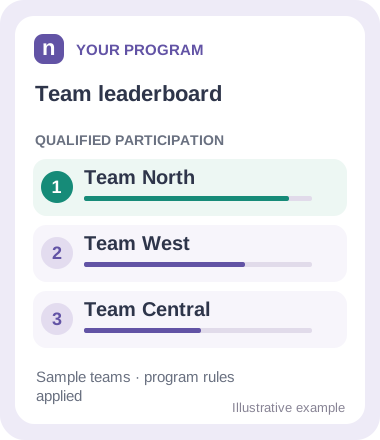
Show sales activity, milestones and team progress with leaderboards for your sales floor.
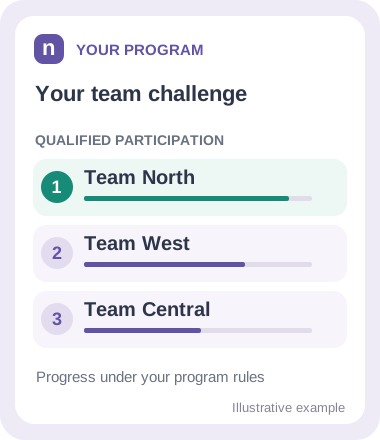
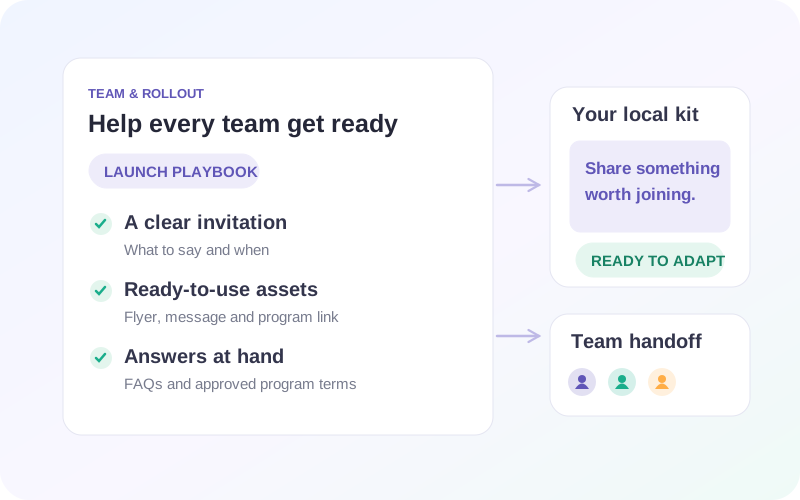
Set a defined campaign period, eligible activities and fair comparison groups. Let reps see their progress while managers review qualifying results before rewards are issued.
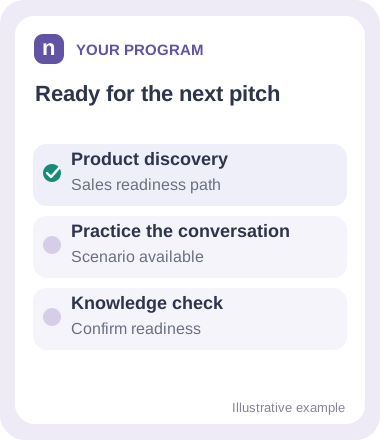
Build short knowledge checks and practice activities around a product, sales play or kickoff. Recognize completed milestones and give managers a view of the follow-up their team needs.
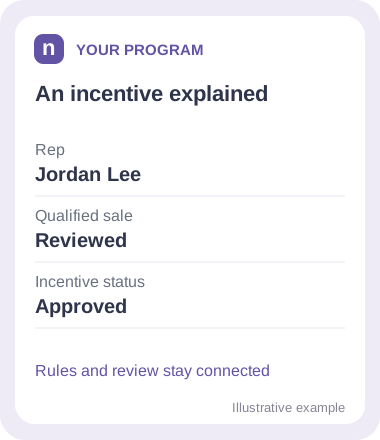
Give your reps a clear reason to act. We connect approved sales events, calculation rules and review checkpoints so your team understands what qualifies and why.
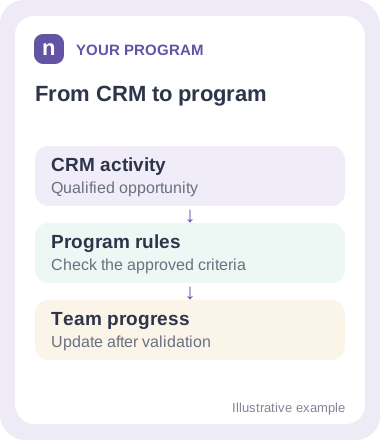
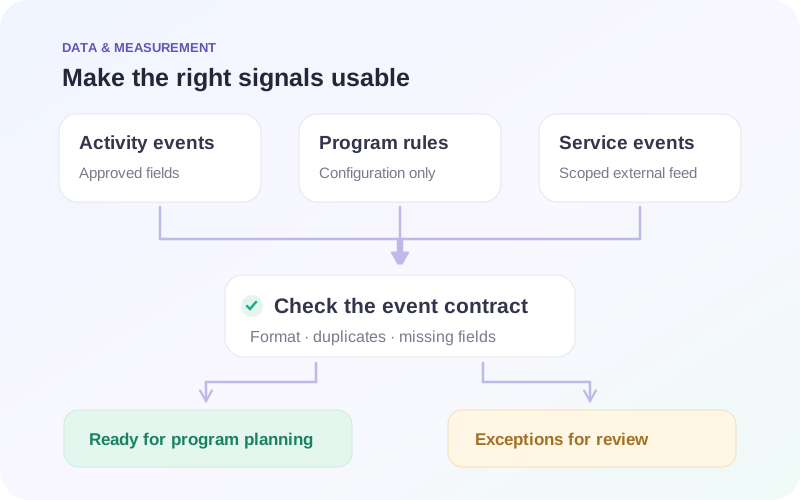
Map the sales events that drive challenges, recognition and rewards. Check identifiers, qualification status and duplicate activity before those events update a participant's progress.
NEW Agentic Studio
Bring your program rules and business context. Shape a playbook with your team, then put agents to work preparing campaigns, useful assets and your next growth opportunity.
Lifetime Engagement prepares promotional assets. Opportunity Miner finds new program opportunities. Data Wrangler checks connected data. Tribe Leader Support equips your advocates.
See Agentic Studio in action →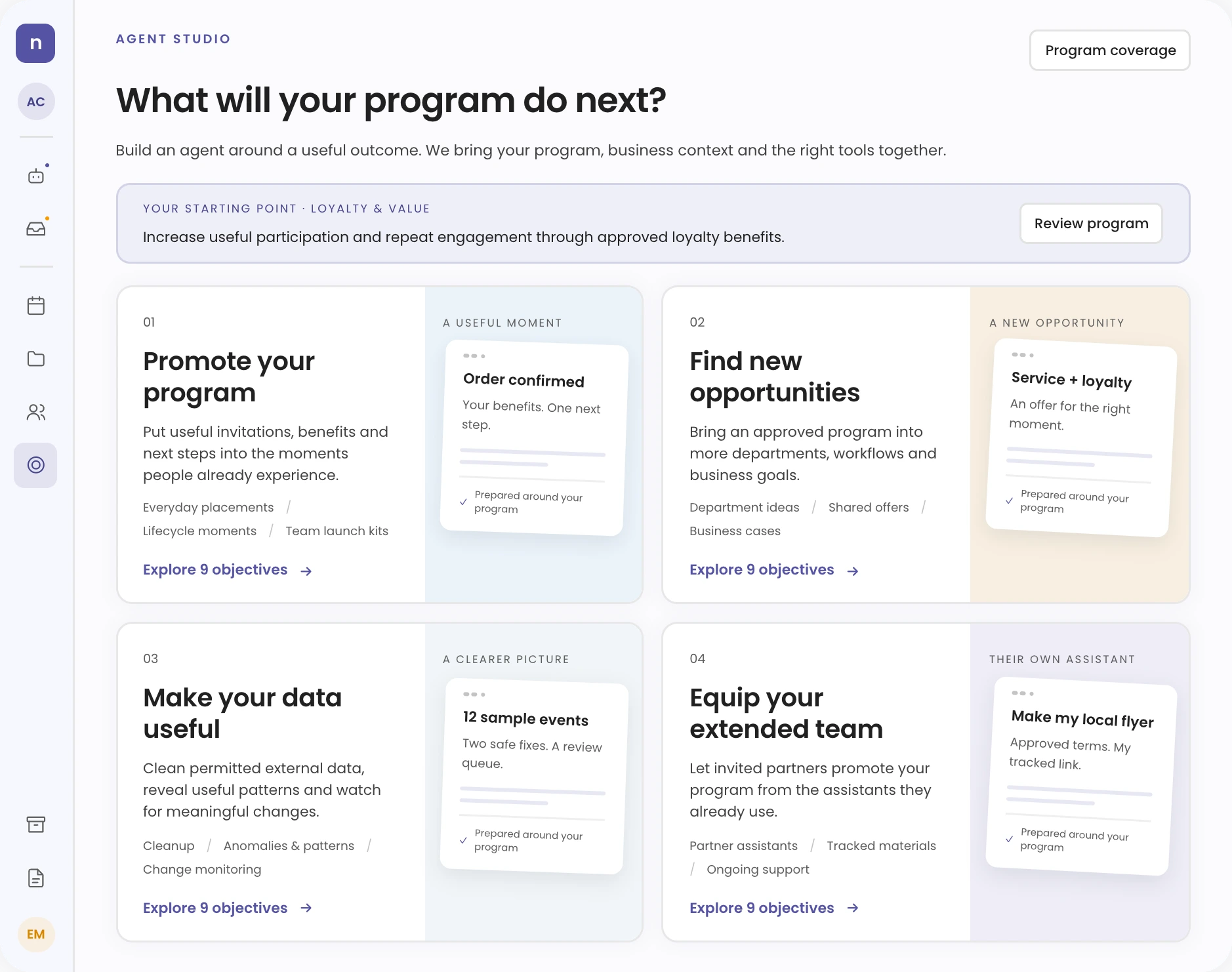
EXPLORE WITH YOUR LIFETIME ENGAGEMENT AGENT
How do you use sales leaderboard software during live selling sessions?
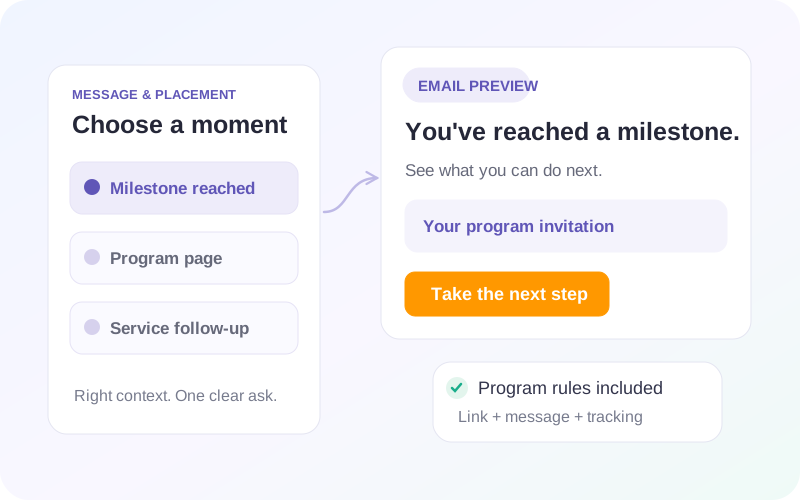
During live selling, sales leaderboard software works best with one ask per moment: start-of-shift goal, rank change alerts, a mid-session push and an end-of-shift wrap. This grid maps each moment in telecom stores and call centers to trigger, mechanic, message and KPI.
EXPLORE WITH YOUR OPPORTUNITY MINER AGENT
What is sales leaderboard software?
Sales leaderboard software pulls rep activity and opportunity data from the CRM, ranks reps or teams in near real time, and shows the standings on office TVs, mobile and chat. Sales managers use it to make effort and results visible and to tie daily activity to quota attainment rate.
EXPLORE WITH YOUR OPPORTUNITY MINER AGENT
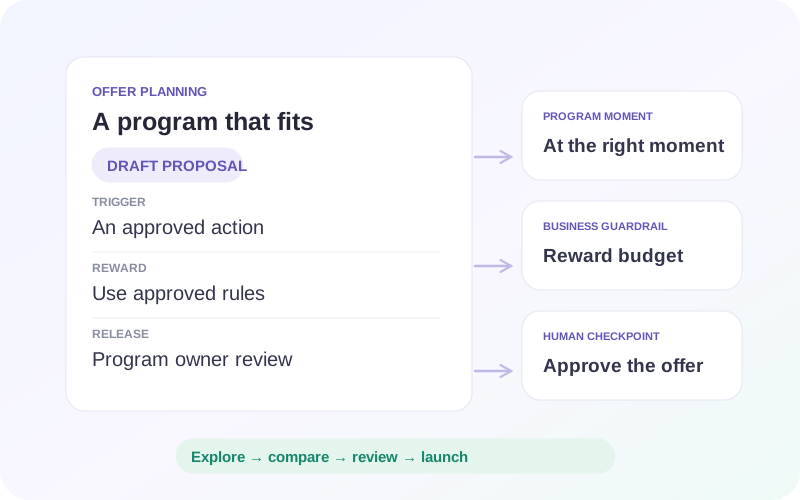
What does running sales leaderboard software look like in practice?
In practice, an inside sales manager launches sales leaderboard software in phases: pick metrics, sync CRM data, put boards on TVs, then run a short team challenge at launch. This example retail scenario shows each choice and how it connects rank to pipeline created per rep.
EXPLORE WITH YOUR OPPORTUNITY MINER AGENT
What should a telecom company add after branded marketing games to engage its own sales reps?
Adding sales leaderboard software is the logical next step when branded marketing games engage customers but store and call-center reps stay disconnected from the results. The leaderboard turns rep effort into a visible weekly race, reusing the game engine, badges and reward catalog you already fund.
EXPLORE WITH YOUR OPPORTUNITY MINER AGENT
How do you evaluate sales leaderboard software vendors?
Evaluate sales leaderboard software vendors with a weighted scorecard covering CRM data sync, TV and mobile display, tiered and ramp boards, anti-gaming controls, security and pricing.
EXPLORE WITH YOUR OPPORTUNITY MINER AGENT
Can sales leaderboard software be a competitive advantage in retail?
Yes, but only the parts competitors cannot buy off the shelf: your rep performance data, coaching rhythm and how fast you change the game. A TV board alone is table stakes; sustained weekly participation across stores is the leading signal of a real advantage.
EXPLORE WITH YOUR OPPORTUNITY MINER AGENT
What should a sales leaderboard software RFP include?
A sales leaderboard software RFP should cover objectives with ramp-time baselines, scope, functional requirements, CRM and ERP integration, security, TCPA consent handling and pricing, each scored on a weighted rubric. Telecom teams with member or agent communities can add an optional AMS community integration lot.
EXPLORE WITH YOUR OPPORTUNITY MINER AGENT
What are creative sales leaderboard ideas that grow pipeline?
The ideas that grow pipeline created per rep reward pipeline-producing actions and give mid-pack reps a race to win: buddy goals, a sales dollar stash, focus-product boards and ramp leagues.
EXPLORE WITH YOUR OPPORTUNITY MINER AGENT
What are the stages of sales leaderboard maturity?
Sales leaderboard maturity runs through five levels: ad hoc, pilot, managed, integrated and optimized. Each level shows observable evidence in metrics, data, rules, governance and team, and the move to the next level depends on exit criteria, especially ramp-cohort reporting for new reps.
EXPLORE WITH YOUR DATA WRANGLER AGENT
What KPIs measure sales leaderboard software success?
Sales leaderboard software is judged by pipeline created per rep, quota attainment rate, rep activity metrics, weekly active share and new-rep ramp time. Each needs a formula, a time window and an owner, and targets come from a baseline period or holdout, never an industry number.
EXPLORE WITH YOUR DATA WRANGLER AGENT
How can AI agents help run sales leaderboard software?
AI agents can draft challenges, check activity data quality, flag gaming patterns and write weekly summaries for sales leaderboard software, while the Sales Operations Manager stays accountable for metric changes, rewards and disqualifications. This RACI shows each task's autonomy level and approval checkpoint.
EXPLORE WITH YOUR DATA WRANGLER AGENT
What compliance rules apply to sales leaderboard software?
Sales leaderboard software is legal to run; the main exposure is how you message reps. Automated SMS rank alerts to personal phones fall under TCPA consent rules, so the deciding factors are channel, phone ownership, consent records, opt-out handling and quiet hours.
EXPLORE WITH YOUR DATA WRANGLER AGENT
How do you connect sales leaderboard software to your CRM?
Connecting sales leaderboard software to a CRM takes nine steps, from listing source objects to verifying live ranks. Activity and opportunity data flow in from the CRM, booked revenue from the ERP and alerts go out through Teams, with identity and data-quality rules set before launch.
EXPLORE WITH YOUR TRIBE LEADER SUPPORT AGENT
What are common sales leaderboard software mistakes in planning?
Planning choices decide whether sales leaderboard software motivates or backfires: one public board, the wrong activity metric and no data owner cause most trouble. This comparison sets each common Plan-phase choice against a better one, with symptoms and owners, for retail and inside sales teams.

Customer Perspective
If you're looking for a powerful platform to run your loyalty and promotions initiatives, NextBee should be your first choice.
Mary Velosky
Executive Vice President · Eniva Health
Compare related approaches and choose the ideas you want to see in your demo.
Turn approved sales activities and milestones into challenges, progress and recognition.
Explore this use case →Run sales incentive programs with qualified goals, visible progress and reward rules.
Explore this use case →Build sales contests, brackets and leaderboards around qualified performance metrics.
Explore this use case →Reward approved sales outcomes using margin, product mix and discount rules you define.
Explore this use case →Run short-term incentives for employed sales teams with clear qualification and rewards.
Explore this use case →Build gamified challenges for employed and captive insurance sales teams.
Explore this use case →Compare sales gamification options around your goals, integrations and reward model.
Explore this use case →Give employee teams visible progress with KPI leaderboards and achievement views.
Explore this use case →Engage your sales kickoff audience with session challenges, quizzes and team recognition.
Explore this use case →Run an employee points program with clear earning rules and a branded rewards experience.
Explore this use case →Build non-cash incentives around approved quality, service and participation goals.
Explore this use case →Bring points, badges and challenges to employee programs across your organization.
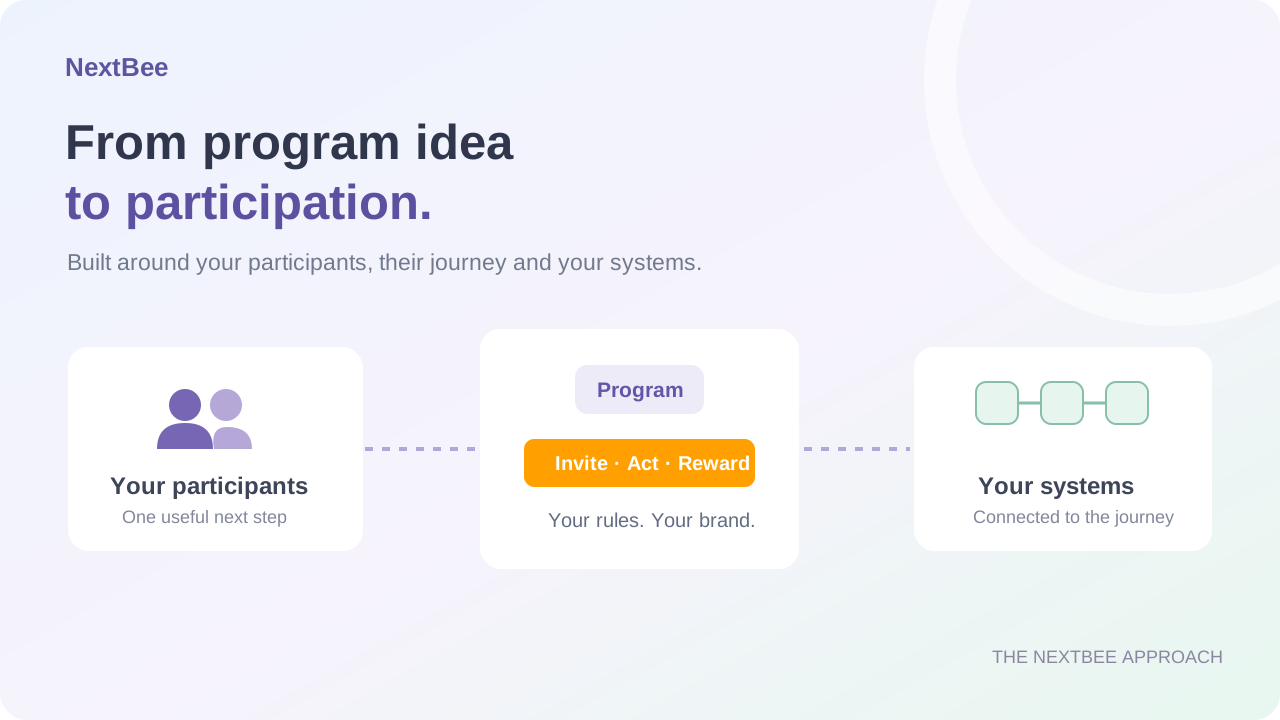
Explore this use case →Bring your program brief, integration questions and rollout priorities. Work through the choices with a team that connects strategy, program operations and implementation.

Head of Strategic Partnerships
Help colleagues recognize a useful contribution with a short explanation of what changed for the team.

Client Relations Director
Give managers an agreed budget and fair criteria for recognizing contributions close to when the work happens.

Communications Director
Guide a new colleague and their buddy through useful milestones, with clear instructions and a way to ask for help.

Customer Experience Lead
Recognize an agreed team achievement using evidence that fits the work and the opportunity each person had.