
Instant Rebate Program
Run instant rebate programs with purchase eligibility and retailer reimbursement flows.
Explore this use case →
Volume Rebate Program
Use a volume rebate program to apply agreed volume or growth thresholds to eligible purchases in your rebate program.
Track purchases toward each tier
Collect purchase data continuously, so customers see progress toward every volume rebate tier as they buy.
Verify tier achievement
Avoid disputes with customers by calculating tiers automatically from verified purchase data and signed contract terms.
Pay rebates accurately
Settle tiered rebates on schedule to reward customer growth and encourage customers to keep buying more.
✓ SOC 2 Type IITrusted by 300+ brands




As a trusted partner, the Nextbee team has consistently delivered reliable and responsive service in support of Just Energy's digital gift card program.
The team has helped us scale the referral program to multiple markets including US, Japan, Australia, Singapore.
NextBee delivered the right platform and the right partnership. Their comprehensive solution and collaborative approach helped us grow participation from an original goal of 10% to 35% of our customer base.
If you're looking for a powerful platform to run your loyalty and promotions initiatives, NextBee should be your first choice.
An ROI positive program is not just a buzzword, but a commitment we stand by.




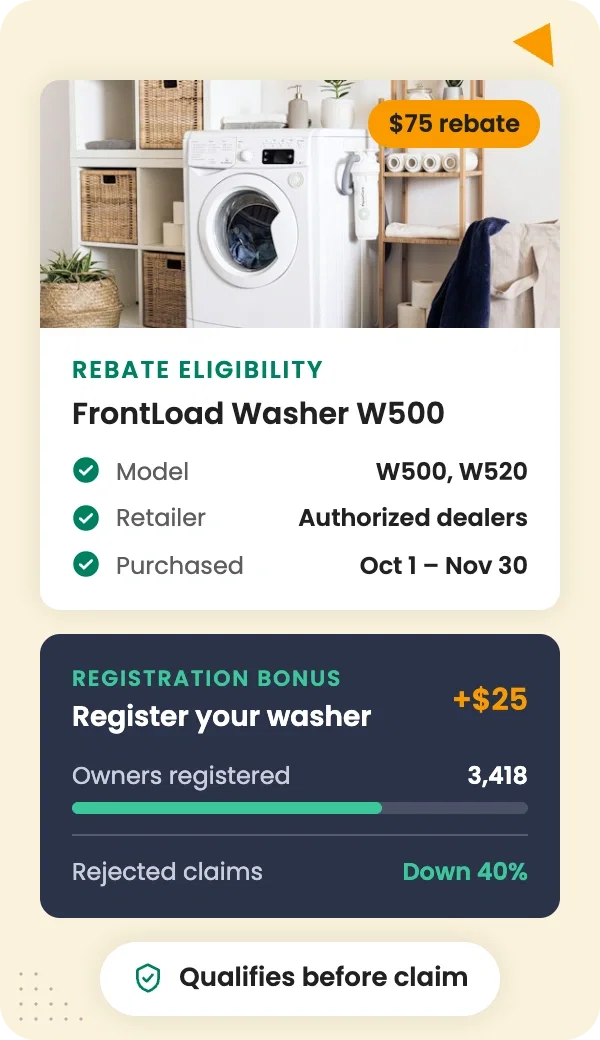
Show customers which models, sellers, dates, and purchase conditions qualify before they start a claim, and add product registration incentives when you want owners to register eligible appliances. Your appliance manufacturer rebate program runs with fewer support calls and fewer rejected claims.
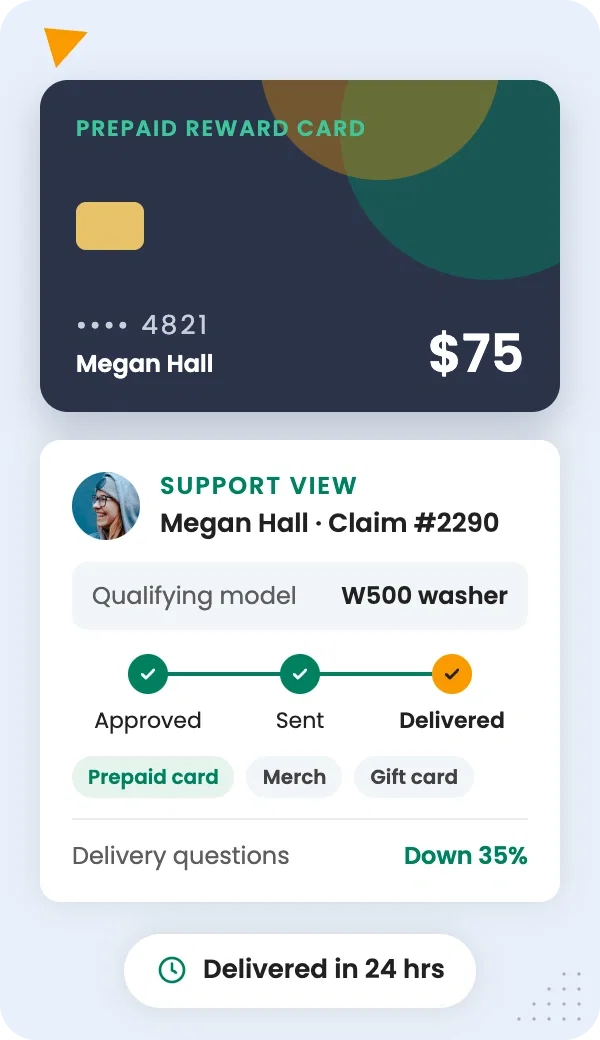
Send approved customers the reward set for their promotion, whether that is a prepaid card, merchandise, or a digital gift card. Support teams see the qualifying appliance next to each reward, so they can answer delivery questions quickly.
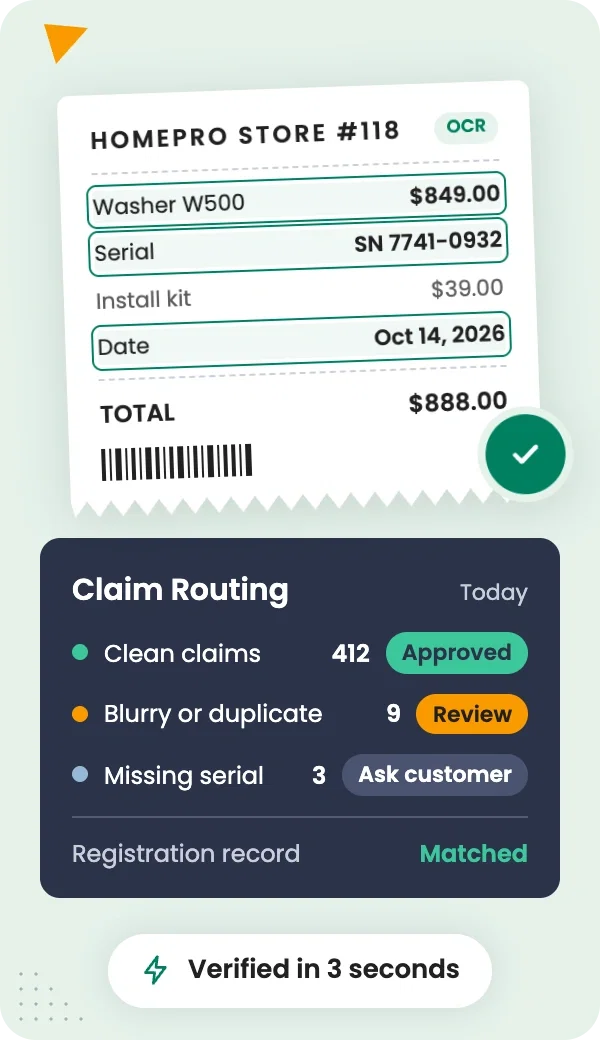
Qualify claims with receipts, model and serial numbers, retailer details, and registration records, using OCR to capture receipt data quickly. Unclear or duplicate evidence goes to manual review, so clean claims never wait.
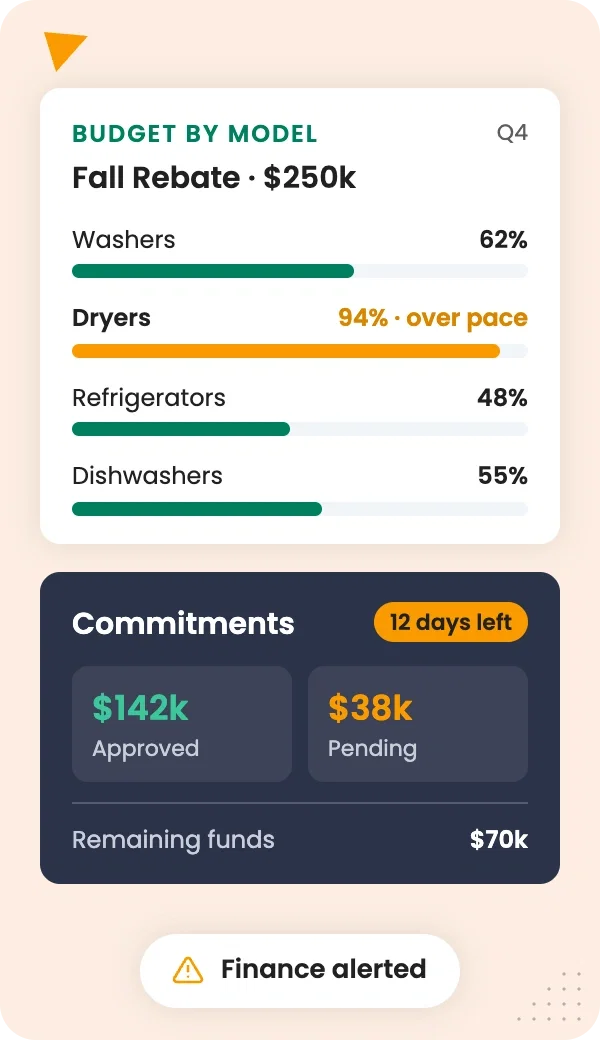
Compare campaign funds with pending and approved claims before an offer closes, broken down by appliance model. You spot a product line using more budget than planned while there is still time to act.
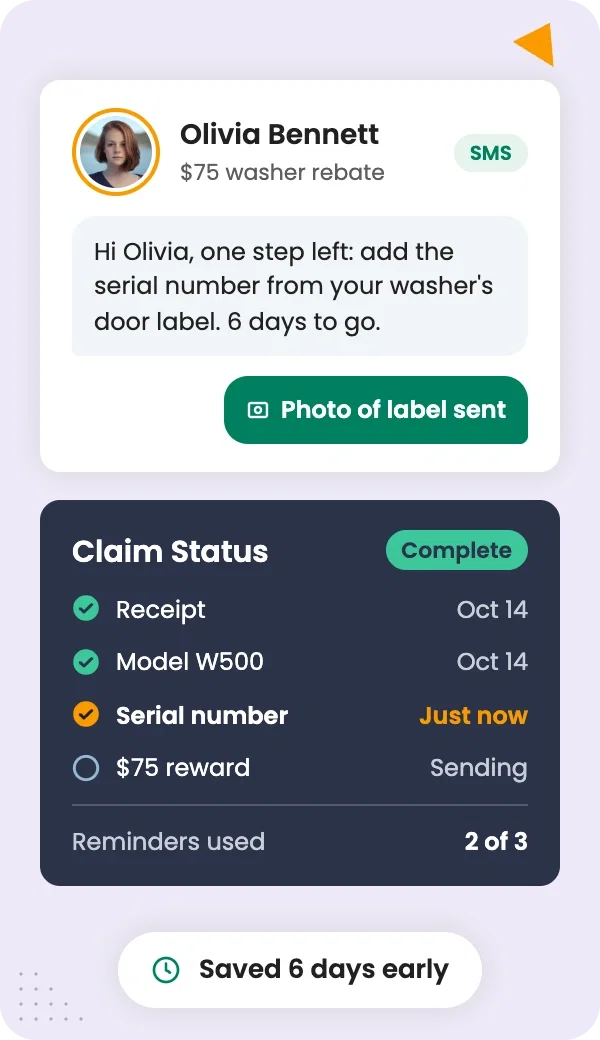
Tell participants the exact receipt, serial number, or purchase detail still needed, instead of a generic pending message. Reminders focus on claims that can still be completed before the promotion ends.
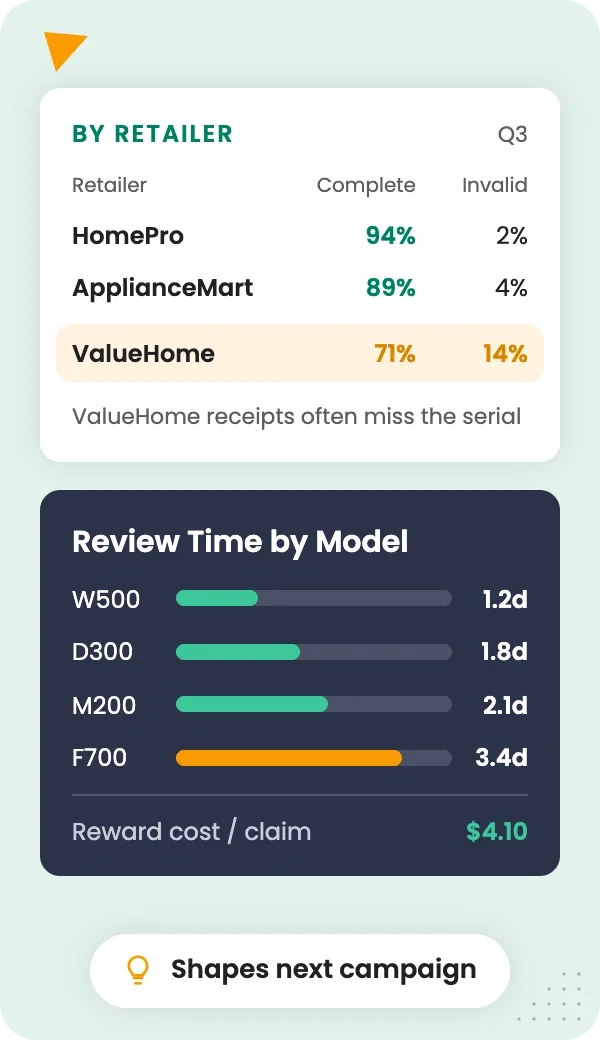
Review completion rates, review time, invalid submissions, and reward cost by model and retailer. Recurring problems with a retailer or model shape how you structure the next campaign.
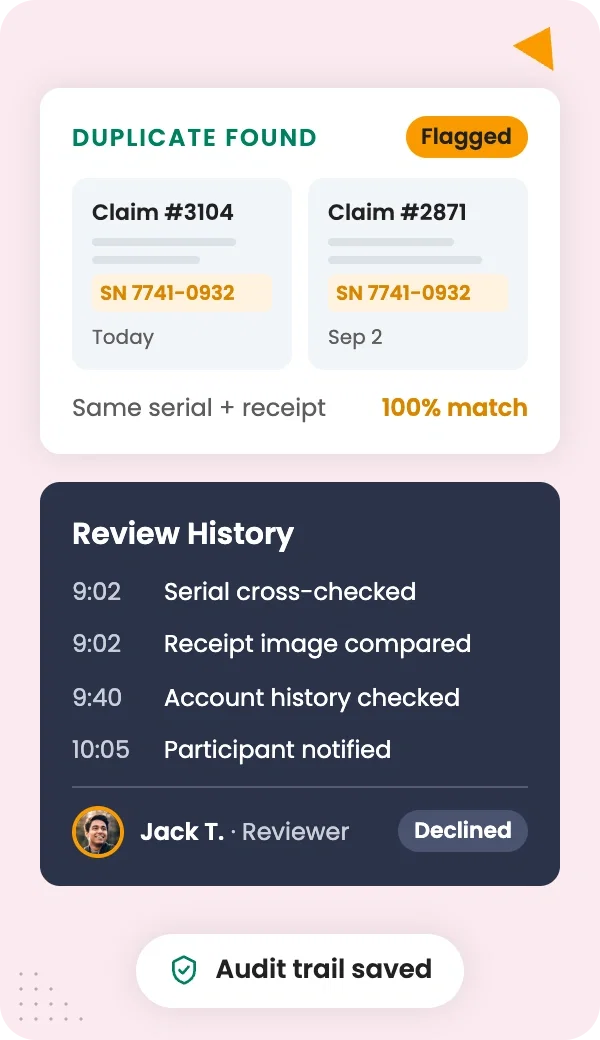
Flag duplicate receipts, reused serial numbers, and unusual participant activity for extra review without slowing every claim. Reward fraud prevention keeps a review history, so you can show what was checked if an exception is questioned later.
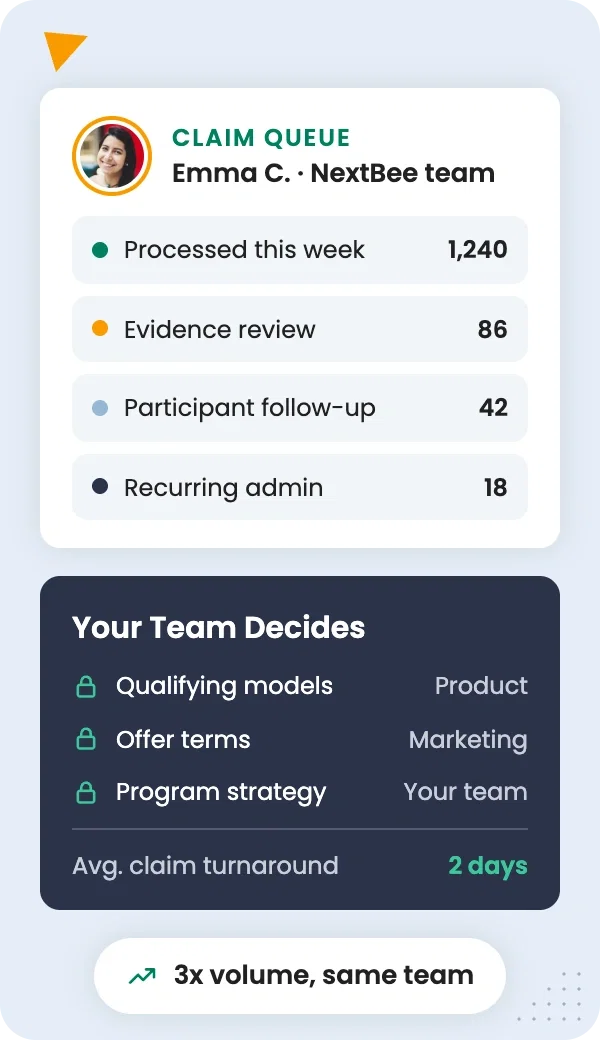
Let NextBee organize claim queues, participant follow-up, evidence review, and recurring administration under the rules your team defines. Product and marketing teams stay in control of qualifying models, terms, and strategy.
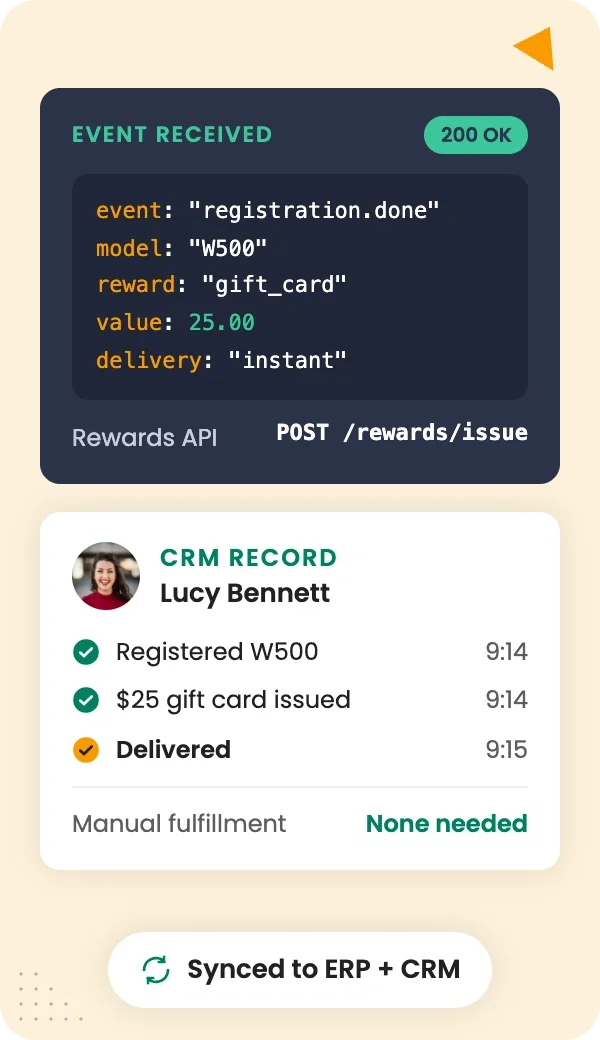
Kick off the next step through the rewards API when a product registration or qualified claim completes. Delivery status flows back, so each customer record keeps its context after qualification.
Give each new-device, upgrade, or trade-in offer its own product list, dates, and qualification rules. Customers know exactly what to submit, and your team avoids one-size-fits-all rules that cause disputes.
Pair cashback with purchase campaigns and store credit with offers that bring customers back, all inside a branded redemption experience. Customers only see the reward choices approved for their promotion.
Collect retailer, device, receipt, and trade-in evidence only when the promotion requires it. Straightforward submissions move through automatically, while incomplete or conflicting ones wait for review.
Set approval thresholds and value limits that match each campaign, from high-value upgrades to small promotional credits. Finance reviews commitments by campaign and reward type instead of one blended spend category.
Display reward choices, redemption status, and any remaining action in one portal. Reward redemption reminders go only to customers with unredeemed value, not to those who already finished.
Separate claim completion from reward acceptance, delivery exceptions, and recovery actions. Reward fulfillment tracking shows exactly where participation drops, so you fix the right step.
Weigh transaction eligibility, customer identity, prior rewards, and value limits before approving cashback or promotional credit. Every adjustment stays traceable when an administrator corrects a credit or investigates unusual activity.
Hand recipient processing, reward selection, fulfillment monitoring, and participant support to our incentive fulfillment services team. Your product marketers keep ownership of products, offers, and retail relationships.
Initiate automated gift card rewards from approved Salesforce, HubSpot, Qualtrics, or Zapier events, with no manual handoff. Evaluate gift card API providers on event flow, recipient choice, delivery status, and recovery before implementation.
List the eligible equipment, purchase window, trade-account requirements, and installation conditions for each contractor rebate program. Channel and volume rebate structures reward purchase growth without forcing every contractor into the same earning model.
Reward qualifying contractors with standard rewards, a dealer incentive trip, or another approved benefit through your incentive travel program and reward catalog. Every reward stays tied to the activity and commercial program that earned it.
Look at invoices, contractor eligibility, and installation records in one view before a claim qualifies. Reviewers fix a missing document without losing the trade account or equipment context.
Send large incentive values, exceptions, and tier adjustments through a reward approval workflow with multiple levels. The approval record stays with the transaction when finance reconciles contractor activity.
Let installers see whether equipment, invoices, or installation evidence still need attention, along with progress toward the next purchase tier. Contractors fix issues themselves instead of calling your team.
Compare volume tiers, individual claims, and dealer incentives by product line and territory. You can tell strong contractor participation apart from busywork that produces little qualified business.
Collect W-9 information and prepare records for 1099 reporting when independent contractors cross reporting thresholds, including participants in a gig professional incentive program. Tax treatment and filing stay with your finance or tax team.
Place claim handling, evidence follow-up, participant communications, and recurring administration behind your manufacturer or trade team. Sales and channel leaders keep ownership of contractor relationships and commercial terms.
Feed account and transaction data from NetSuite, SAP, Dynamics 365, or other ERPs into rebate calculations through ERP rebate integration. Your accounting systems keep the financial records while the incentive workflow handles qualification.
Keep eligibility rules, qualifying purchases, thresholds, and commercial terms for every product line in one rebate management software platform. Each rebate stays connected to the agreement that created it, so nothing gets rebuilt in spreadsheets.
Count member purchases toward a shared group threshold while tracking each participant's contribution. When the group hits its target, your buying group rebate program allocates approved value under the rules you set.
Hold trade account details, purchase records, eligible products, and installation information in the same claim. You can investigate a disputed item without separating it from its agreement or distributor.
Line up qualifying activity, approved amounts, and accrued commitments for each partner agreement. Accounting gets a clean path from the commercial agreement to the numbers it needs to review.
Present claim-level status to contractors and contribution totals to buying-group members, without exposing unrelated partner activity. Every partner sees the progress that matters to its agreement.
Break down qualifying volume, claim outcomes, group attainment, and approved value by distributor, product family, or buying group. Agreements that generate heavy admin without qualified activity stand out quickly.
Keep invalid purchases, account mismatches, and unresolved partner claims out of qualifying totals until a decision is made. A saved decision history explains why balances changed after review.
Move claims, partner follow-up, approvals, and settlement data handoffs to rebate processing support that follows the rules you already set. Sales and finance keep the agreements, and daily processing gets easier.
Weigh rebate management software alternatives against your ERP data, agreement structures, settlement handoffs, reporting, and migration needs. Program, finance, and IT teams get a shared basis for choosing an approach instead of a generic feature checklist.
Present qualifying measures, participant rules, evidence requirements, and program dates to each audience separately, from homeowners to midstream trade allies. Utility rebate processing moves faster when recipients only see the requirements that apply to them.
Move approved participants straight into the reward process for their measure, without reopening the full application. Staff see the approved amount and completion status at a glance.
Evaluate equipment details, invoices, contractor records, and documents against the rules for each measure. Reviewers can tell missing evidence from a true eligibility problem right away.
Split funding by measure, territory, participant type, or local initiative, and compare it with open commitments. Finance sees where funds are tightening while applications are still in review.
Tailor instructions for homeowners and contractors when an application stalls, from a missing document to an equipment correction. Specific next steps reduce the calls you get from participants asking what is holding things up.
Line up submission volume, approval rates, processing time, and committed value by measure and participant type. If a trade-ally process takes longer than customer applications, you can isolate it for improvement.
Trigger an extra check for duplicate applications, inconsistent equipment data, or eligibility questions before approval. Routine applications move through without carrying controls designed for exceptions.
Bring in support for documentation queues, participant communications, and application status while the utility defines measures and terms. Operational work stays separate from the policy decisions that belong to you.
Pass approved customer, contractor, equipment, or project records into the incentive process through agreed handoffs. Billing and other utility systems keep their roles while qualification and status move through the program.
Offer an instant rebate program at the point of sale alongside contractor-led efficiency projects, each with its own rules and eligible measures. Your portfolio grows without forcing every incentive through the same slow path.
Track the measure, participant, approved amount, and completion status together after review. Operations teams answer incentive questions without rebuilding the project from several records.
Check equipment, installation, contractor, and purchase evidence against each program's requirements. A failed requirement gets investigated on its own, and valid evidence elsewhere stays in place.
Weigh approved value against funds assigned by measure, market, or program period before projects finish. Costly exceptions follow a separate approval path instead of draining the routine budget.
Point participants to the project detail or document still blocking qualification instead of an unexplained pending status. Contractors and customers spend less time guessing and more time completing applications.
Measure incentive program ROI by comparing program cost, qualifying activity, and offer structure with defined methods and A/B tests. You see which incentive approach performs better without crediting every change to the reward alone.
Route conflicting documents, repeat submissions, equipment mismatches, and unusual project values to additional review. Standard projects stay on the normal path while exceptions get the attention they need.
Review eligibility, budgets, approvals, data flows, participant journeys, and fulfillment as one operating plan with our incentive program design support. Business, finance, and IT teams start implementation with a shared definition, which also makes an incentive program RFP easier to write.
Identify the exact fields and qualifying events needed from project, CRM, or enterprise systems during implementation. Status returns once the incentive step completes, and core system ownership stays unchanged.
Link clinical trial patient payments to confirmed visits, research activities, or approved reimbursement events. Research participant incentives stay separate from clinical trial management and clinical decisions.
Provide stipends, reimbursements, research payment cards, or digital gift cards based on each study's design, with market-specific choices for multicountry programs. A global rewards platform means you never assume one option works everywhere.
Point each participant record to the approved visit or activity behind the stipend or reimbursement. Staff resolve administrative mismatches without turning the reward system into a clinical research platform.
Assign funding rules to each site, milestone, and participant group, and compare approved value with remaining funds. Study owners know their position before new participant activity creates commitments.
Show participants whether an approved stipend or reimbursement is awaiting processing, in progress, or complete. The experience stays focused on payment administration, not clinical information.
Track processing time, open administrative actions, approved value, and completion by site or study. Teams find operational bottlenecks without presenting them as clinical outcomes.
Send duplicate requests, participant mismatches, wrong milestone status, or unexpected values to review before processing. The study team keeps a full decision history if an exception needs another look.
Assign recipient processing, participant communications, and reward status to our team. Clinical staff keep control of study procedures, milestone confirmation, and participant eligibility.
Receive qualifying milestones through an agreed API workflow and start the right incentive process without duplicate administration. International studies can configure country, currency, and provider needs for each market.
Define the program milestones and member actions your organization approves for healthcare incentive rewards. NextBee coordinates the incentive workflow without making clinical decisions or claiming that a reward produces a health outcome.
Let health plans and patient-support programs offer gift cards, prepaid cards, merchandise, or charity choices according to program design. Every option follows the sponsor's eligibility rules and provider availability.
Confirm through eligibility data that the participant completed the required action, without putting unnecessary clinical details into the reward workflow. Unclear cases go back to the responsible healthcare team.
Allocate funds by initiative or participant group while finance keeps full visibility into approved rewards. Where employee rewards are involved, export reward values for payroll through employee rewards payroll integration, without replacing payroll or tax ownership.
Give participants one view of qualifying actions, reward choices, and program status. Follow-up targets the specific incomplete step instead of sending the same message to every member.
Report qualification, reward acceptance, processing time, and program cost by participant group or initiative. Administrators improve the incentive process while clinical effectiveness stays outside the platform's scope.
Give authorized operators visibility into consent preferences, eligibility, approved milestones, and reward history. The workflow supports your governance process without claiming any certification or exemption you have not established.
Rely on NextBee for configuration, participant communications, reward administration, and operational reporting. Your organization still defines qualifying actions, eligibility, and any clinical or regulatory requirements.
Trigger the reward workflow from a qualifying sponsor event, moving only the data incentive administration needs. Salesforce sync can return reward status to the teams responsible for participant engagement.
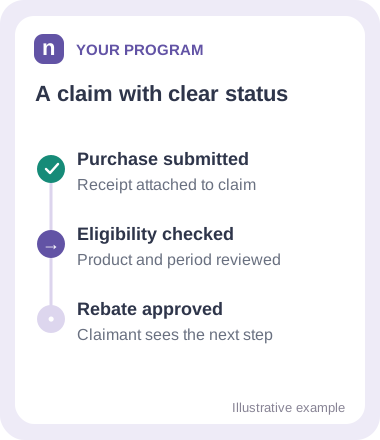
Apply agreed volume or growth thresholds to eligible purchases in your rebate program.
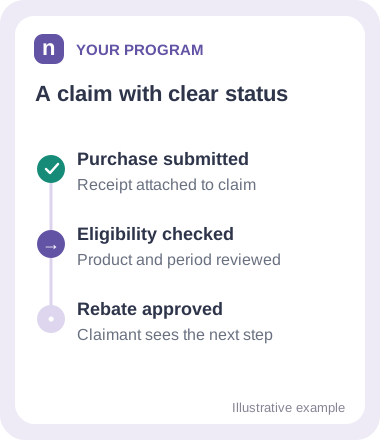
Explain eligible purchases and required documents before a claim is started. Organize submitted receipts, product details and review status so incomplete claims can be resolved clearly.
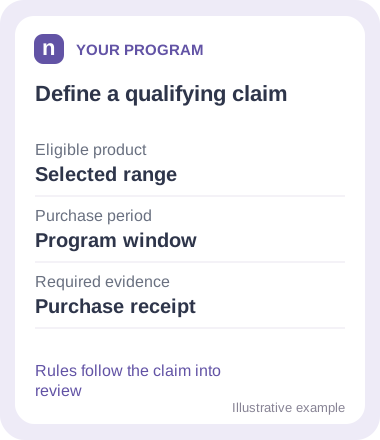
Define qualifying products, purchase periods and program conditions in one reviewed set of rules. Keep exceptions visible so the team can distinguish an incomplete claim from an ineligible one.
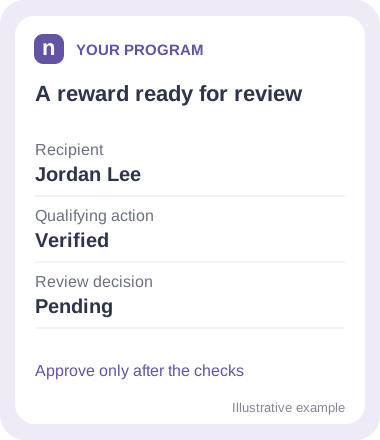
Route reward requests with the activity and eligibility information reviewers need. Keep decisions, exceptions and release status visible so the team can resolve problems before fulfillment.
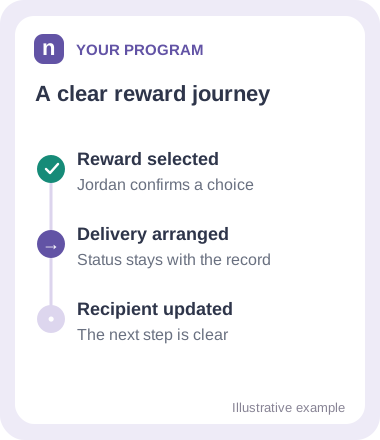
Coordinate the handoff from qualification to fulfillment and track the resulting status. Give operators a way to review failed delivery or recipient questions without losing the original approval context.
NEW Agentic Studio
Bring your program rules and business context. Shape a playbook with your team, then put agents to work preparing campaigns, useful assets and your next growth opportunity.
Lifetime Engagement prepares promotional assets. Opportunity Miner finds new program opportunities. Data Wrangler checks connected data. Tribe Leader Support equips your advocates.
See Agentic Studio in action →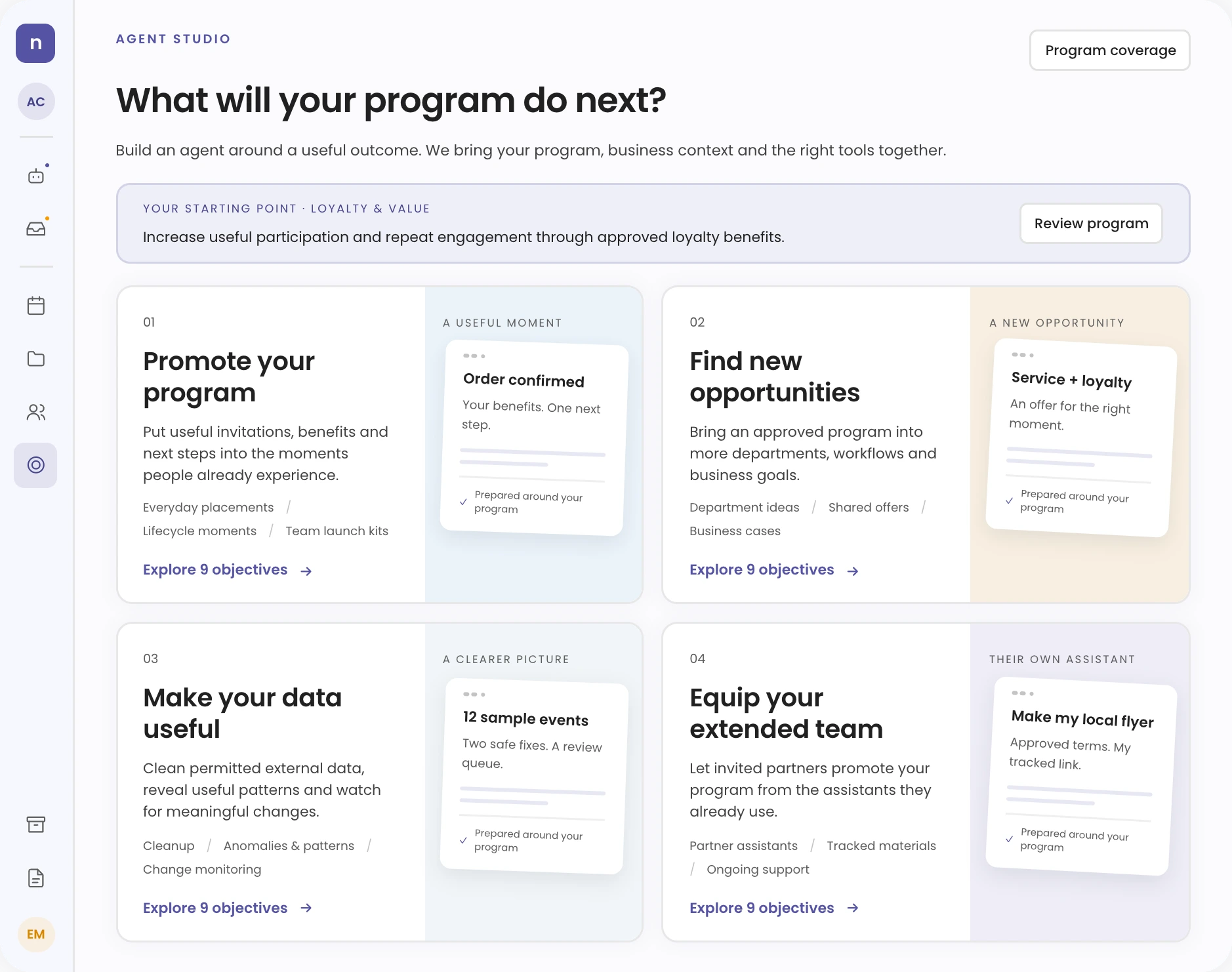
EXPLORE WITH YOUR LIFETIME ENGAGEMENT AGENT
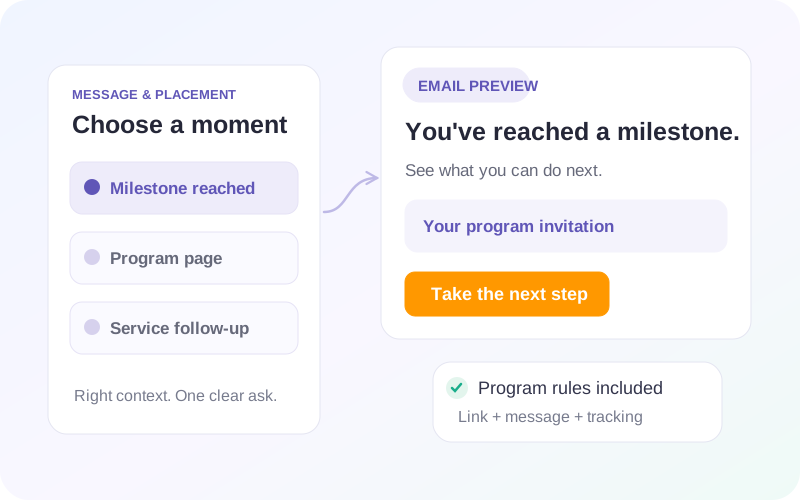
How does a volume rebate program work at the renewal stage?
At renewal, a volume rebate program uses the expiring period's tier results to reset thresholds and invite accounts into the next agreement. Triggers come from ERP period data and contract end dates, and the incentive is usually a credit toward the next tier.
EXPLORE WITH YOUR OPPORTUNITY MINER AGENT
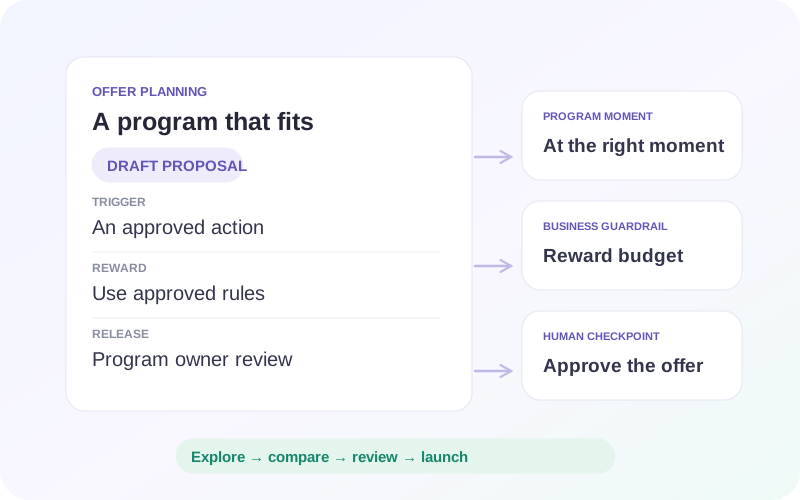
What is a volume rebate program?
A volume rebate program returns a percentage or fixed amount to a customer account once its purchases in a period cross agreed thresholds, often in tiers. The supplier tracks volume from ERP sales data, accrues the expected rebate, and settles after period close by credit memo, check or reward.
EXPLORE WITH YOUR OPPORTUNITY MINER AGENT
Do we need a volume rebate program?
You likely need a volume rebate program when account growth stalls, sales teams hand out one-off price concessions, and few customers ever move to a higher spend tier. Readiness depends on clean ERP sales data, an owner for agreements and accruals, and finance agreement on how rebates are funded.
EXPLORE WITH YOUR OPPORTUNITY MINER AGENT
What should a volume rebate program RFP include?
Every volume rebate program RFP should state objectives and baselines, the agreement and tier scope, ERP data requirements, accrual and settlement needs, security, tax handling and pricing. Adding a VIP loyalty program as an optional lot lets vendors propose a shared ledger and one account view for top customers.
EXPLORE WITH YOUR OPPORTUNITY MINER AGENT
How do you evaluate volume rebate program vendors?
Evaluate volume rebate program vendors on tier and agreement modeling, accrual accuracy, ERP integration, settlement workflow and auditability, then weight them to your goals. A Rebate Analyst should test each vendor with real agreements and check whether accrued and paid amounts reconcile.
EXPLORE WITH YOUR OPPORTUNITY MINER AGENT
Should a volume rebate program and a tiered loyalty program launch together or in sequence?
Launching a volume rebate program and a tiered loyalty program together takes eight steps, starting with a sequencing decision and ending with a combined KPI review. The two share account identity, the reward ledger and a communication calendar, while a stacking rule keeps one purchase from earning both rebate and status credit beyond policy.
EXPLORE WITH YOUR OPPORTUNITY MINER AGENT
How much does a volume rebate program cost and how do you calculate ROI?
Volume rebate program cost is the rebate payout plus software, implementation, administration and settlement effort, while ROI comes only from volume above each account's baseline. The core formula is incremental gross margin minus total program cost, divided by total program cost.
EXPLORE WITH YOUR OPPORTUNITY MINER AGENT
What does running a volume rebate program look like in practice?
In practice a volume rebate program moves through five phases, with Configure taking longest because agreements, tier rules and ERP feeds must be loaded and tested. This example scenario follows a Channel Program Manager whose goal is more accounts reaching the next rebate tier.
EXPLORE WITH YOUR OPPORTUNITY MINER AGENT
What should we add after channel incentive software, and how does a volume rebate program improve rebate cost efficiency?
Adding a volume rebate program to existing channel incentive software shifts spend from activity-based payouts to account-level growth, which can lower rebate cost as a percentage of incremental revenue. Reuse partner records, claim data and the reward budget, but set growth thresholds against baselines to avoid paying for volume you already get.
EXPLORE WITH YOUR OPPORTUNITY MINER AGENT
Can a volume rebate program be a competitive advantage in agricultural input distribution?
Rebate rates are easy to copy in agricultural input distribution, so the rate alone rarely wins accounts. A volume rebate program becomes a differentiator through fast settlement after season close, transparent tier progress and data that helps retailers plan early orders.
EXPLORE WITH YOUR DATA WRANGLER AGENT
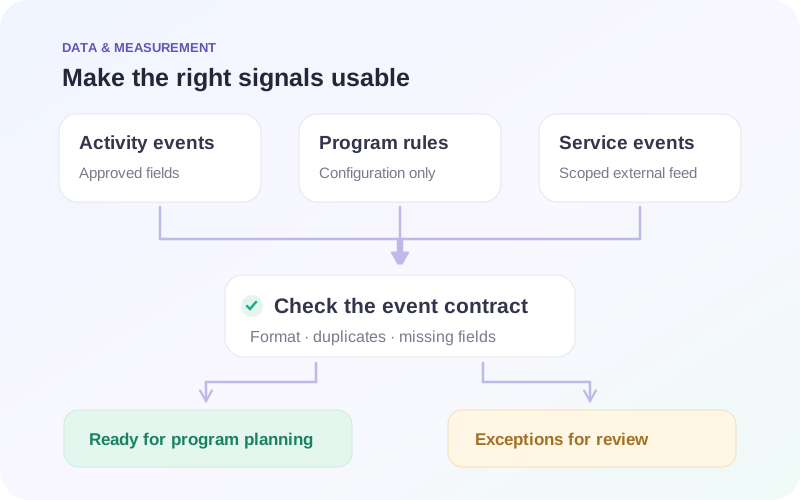
How do you prevent fraud in a volume rebate program?
Preventing fraud in a volume rebate program starts at the Plan phase: define what counts as qualifying volume, cap and verify it against ERP invoices, and watch for patterns such as order splitting, returns after tier attainment and quarter-end pull-forward. Analytics on partner activity turn these into alerts rather than audits.
EXPLORE WITH YOUR DATA WRANGLER AGENT
What metrics should a volume rebate program dashboard show?
A volume rebate program dashboard should lead with incremental purchase volume above baseline per account, then show tier progress, accrual liability, accrual variance and days to settle. Each metric needs a formula, a source in ERP, an owner and an alert condition.
EXPLORE WITH YOUR DATA WRANGLER AGENT
What compliance rules apply to a volume rebate program and who approves them?
Volume rebate programs are lawful when terms are disclosed, applied consistently and paid as written, with tax treatment confirmed for each payee type. The Pricing Manager is accountable for rebate terms, while finance, tax and legal approve their own parts.
EXPLORE WITH YOUR TRIBE LEADER SUPPORT AGENT
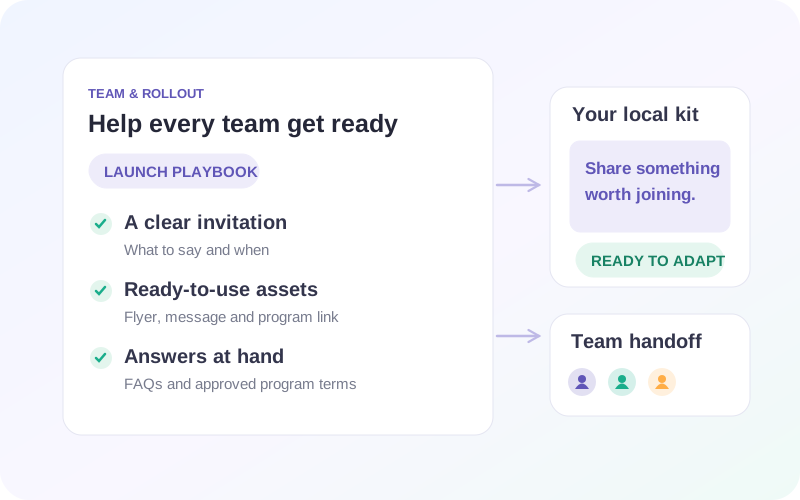
What are common volume rebate program mistakes in the first 90 days?
Most Adopt-phase volume rebate program mistakes show up as accrual variance: accrued and paid amounts drift apart because returns, agreement changes and late invoices were not modeled. Customers also doubt the program when they cannot see tier progress or receive settlement late.

Customer Perspective
If you're looking for a powerful platform to run your loyalty and promotions initiatives, NextBee should be your first choice.
Mary Velosky
Executive Vice President · Eniva Health
Compare related approaches and choose the ideas you want to see in your demo.
Run instant rebate programs with purchase eligibility and retailer reimbursement flows.
Explore this use case →Manage rebate agreements, qualification, claims and settlement workflows in one program.
Explore this use case →Give consumers a clear path to submit purchase evidence and claim an eligible rebate.
Explore this use case →Coordinate manufacturer-funded rebates for dealers, distributors and trade customers.
Explore this use case →Coordinate rebates earned through combined qualifying purchases across a defined group.
Explore this use case →Give eligible customers a structured way to claim an approved product upgrade rebate.
Explore this use case →Help eligible participants finish rebate claims with clear steps and timely follow-up.
Explore this use case →Coordinate participation and claims for approved energy efficiency incentive programs.
Explore this use case →Run appliance and electronics rebates with clear product registration and purchase rules.
Explore this use case →Manage building-products rebates tied to eligible contractor purchases and installations.
Explore this use case →Connect agreed ERP purchase and account data to rebate qualification and settlement workflows.
Explore this use case →Operate rebate campaigns with configurable software and coordinated processing support.
Explore this use case →Bring your program brief, integration questions and rollout priorities. Work through the choices with a team that connects strategy, program operations and implementation.

Head of Strategic Partnerships
Give participants a concise checklist of the evidence needed before they submit a claim.

Client Relations Director
Present eligible reward options with their terms, availability and next claim step in one place.

Communications Director
Bring unmatched events, pending decisions and fulfillment exceptions into one owner-led operating review.

Customer Experience Lead
Map the agreed qualification, refund and cancellation events before moving a reward to its final status.